The year I graduated college, my sister had her first child. Luckily, I went to grad school in Baltimore while she was in the D.C. area, so I could visit often. Sometimes I would take the MARC to visit for a weekend, for no reason. Other than to be around family; other than to escape my life; other than the fact that playing with a 2, 3, 4 year old immediately reaffirmed the joy in life. Other than the fact that immersing myself in family drama reminded me that I was needed, to temporarily fill the vacuum that had grown up around my sense of self that grad school had torn down - other than that, no reason.
I learned a lot about myself during that time. And a lot of it came through watching my nephew grow up, who my sister calls my son because he is so like me.
He is like me because he is quiet. He is scared. He is good at math. He doesn't like to try new things.
I've watched him make life so much harder for himself. But it is hard to say, you don't have to react this way - when someone catches you doing something wrong, it doesn't mean everybody hates you and the world is falling apart - you're not going to magically be immediately good at riding a bike, it takes patience and practice - etc., etc. And yet all I have is compassion. What I want to say is, it is not your fault. Your brain is not your fault. My brain is not my fault.
It became even clearer when my sister had a second child, who is definitely her daughter and not mine at all. She talks and talks. She is fearless. She may or may not be good at math, it is too early to tell, but she definitely likes pink. She jumps into new things the same way she swims - with reckless abandon, expecting the people around her to keep her head above water.
Her fearlessness is not her fault. His fear is not his fault.
The things that happened when I was young, the way my brain is wired, my overactive amygdala - none of this is my fault. But it is still hard. I still make choices. Surely some of those I have responsibility for. But sometimes I just can't. Maybe I could, though. I never know.
In all of this confusion and uncertainty, the only shining light that I can see is compassion. How to obtain that compassion, I have no idea, but I believe that is what's needed. We have this illusion of self-control, of power over our thoughts and deeds, and yet when we prod our human natures with science we learn of our biased perceptions, our need to construct stories about ourselves, and the mental shortcuts of our lazy, energy-saving brains. It is too easy to judge someone by what you think you would do yourself. But what would you do if you had their brain?
Compassion for yourself means giving yourself a break. Compassion for others means embracing uncertainty - without understanding what motives, what life-choices, what brain chemistry brought them to where they are, compassion means withholding judgment.
Of course, compassion is hard, because our brains do not do well with uncertainty. But your brain is not your fault.
Showing posts with label Psychology. Show all posts
Showing posts with label Psychology. Show all posts
Saturday, February 27, 2016

Friday, January 22, 2016
Tigger Warning
Luckily I'm not the first to think of this pun.
Recently I realized that something is basically acting as a trigger for anxiety. This is good because I can now focus on separating the thing from the anxiety, so that I can handle both in an appropriate way, instead of just reacting to anxiety and not really dealing with the thing.
This is also good because as I was writing trigger I noticed how close it is to Tigger, and then I thought about how being triggered is like being bounced.
I am enjoying this analogy immensely.
Being bounced is almost always unexpected and unwanted. It knocks you flat on your back. And then there's a Tigger on top of you. The Tigger is kind of child-like, and it won't go away.
Once you are bounced and would like your Tigger to go away, I suggest feeding it extract of malt.
There are a lot of ways in which being triggered is not at all like being bounced, but I am deciding that when something is causing me anxiety, and it is not really that thing's fault, I will treat it as if I've just been bounced. There's a Tigger in the room and I need to feed it extract of malt or go climb a tree before I can go back to dealing with the thing.
 |
| From DeviantArt |
Recently I realized that something is basically acting as a trigger for anxiety. This is good because I can now focus on separating the thing from the anxiety, so that I can handle both in an appropriate way, instead of just reacting to anxiety and not really dealing with the thing.
This is also good because as I was writing trigger I noticed how close it is to Tigger, and then I thought about how being triggered is like being bounced.
I am enjoying this analogy immensely.
Being bounced is almost always unexpected and unwanted. It knocks you flat on your back. And then there's a Tigger on top of you. The Tigger is kind of child-like, and it won't go away.
Tigger: I “recoggonize” you. You’re the one that’s stuffed with fluff.
Winnie the Pooh: Yeah. And you’re sitting on it.
Tigger: Yeah. And it’s comfy, too!
~ (Tigger), A. A. Milne, Winnie The Pooh
Once you are bounced and would like your Tigger to go away, I suggest feeding it extract of malt.
There are a lot of ways in which being triggered is not at all like being bounced, but I am deciding that when something is causing me anxiety, and it is not really that thing's fault, I will treat it as if I've just been bounced. There's a Tigger in the room and I need to feed it extract of malt or go climb a tree before I can go back to dealing with the thing.
Monday, September 21, 2015
Depressed Thoughts
At least half, if not more, of my depressed thoughts involve trying to figure out my depressed thoughts:
What is this.... am I feeling lonely? But I was hanging out with cool new people this weekend. Am I afraid? Why can't I just do what I need to do... Is it because people expect things of me? I had a good run of not being depressed, but that seems to be coming to an end. But I was feeling so good yesterday! How do other people manage? Why can't I focus! I just need to make some plots, just get something going. My brain is out to get me again. I'll never make it as a scientist...
It is the ultimate mindfuck. I become at war with myself. "Oh man, I suck because X and Y." "But X and Y are irrational, and what's more, not even true. Here's some empirical evidence." "I know, I'm so irrational! I SUCK!"
I've read better descriptions of how depression messes with you, but they are lost on the internet.
Currently, I'm not quite at the "I SUCK" part, and nowhere near the complete lack of motivation for anything phase, but my brain feels like cotton and I feel inadequate. Even writing this is making me feel guilty, like I am making up excuses for laziness.
So, what can I do about it?
My first response was to eat some chocolate. But my bar of Green & Black's 85% is getting small. Then I started writing this. Next I will identify some small and easy things to put on/check off my To Do list. After that, I might go home. Whether I can go home without guilt is the tricky part. If it doesn't seem like I can get rid of the guilt, I might stare at some code for a while to give myself a chance to do work. I will also look through a special esteem-boosting email folder I started a little while ago, prompted by more internet advice. I don't know whether reading things that once upon a time made me feel good about myself will do the same now, but it's better than letting the depressed thoughts feed on themselves, using my brain as a host.
Finally, what I'm going to do is post this, because writing it seems to have helped. Because even though I'm not looking for sympathy, not making excuses, and even though I'm not that depressed... this shit is real and sucks and I'm going to complain about it on the internet.
What is this.... am I feeling lonely? But I was hanging out with cool new people this weekend. Am I afraid? Why can't I just do what I need to do... Is it because people expect things of me? I had a good run of not being depressed, but that seems to be coming to an end. But I was feeling so good yesterday! How do other people manage? Why can't I focus! I just need to make some plots, just get something going. My brain is out to get me again. I'll never make it as a scientist...
It is the ultimate mindfuck. I become at war with myself. "Oh man, I suck because X and Y." "But X and Y are irrational, and what's more, not even true. Here's some empirical evidence." "I know, I'm so irrational! I SUCK!"
I've read better descriptions of how depression messes with you, but they are lost on the internet.
Currently, I'm not quite at the "I SUCK" part, and nowhere near the complete lack of motivation for anything phase, but my brain feels like cotton and I feel inadequate. Even writing this is making me feel guilty, like I am making up excuses for laziness.
So, what can I do about it?
My first response was to eat some chocolate. But my bar of Green & Black's 85% is getting small. Then I started writing this. Next I will identify some small and easy things to put on/check off my To Do list. After that, I might go home. Whether I can go home without guilt is the tricky part. If it doesn't seem like I can get rid of the guilt, I might stare at some code for a while to give myself a chance to do work. I will also look through a special esteem-boosting email folder I started a little while ago, prompted by more internet advice. I don't know whether reading things that once upon a time made me feel good about myself will do the same now, but it's better than letting the depressed thoughts feed on themselves, using my brain as a host.
Finally, what I'm going to do is post this, because writing it seems to have helped. Because even though I'm not looking for sympathy, not making excuses, and even though I'm not that depressed... this shit is real and sucks and I'm going to complain about it on the internet.
Saturday, September 13, 2014
The Psychology of Gaming
[Note: this blog post contains gamer terminology. If some terminology is unknown to you, hopefully I have linked it to an explanatory website, since I don't want to have to make everything explicit to noobs. (See, that's a link to the Oxford Dictionary. Legit!)]
I don't like to think of myself as a "gamer," a word which invariably is associated with teenage boys secluded in basements and poor life choices. But, I play a lot of games and always have, so I guess the term fits. Whether an involved story-driven RPG or adventure game, a Strategy game, an FPS on my brother's console, or Minesweeper and Solitaire, they all have their place. They've all suited some purpose at some point in my life, both healing and destructive.
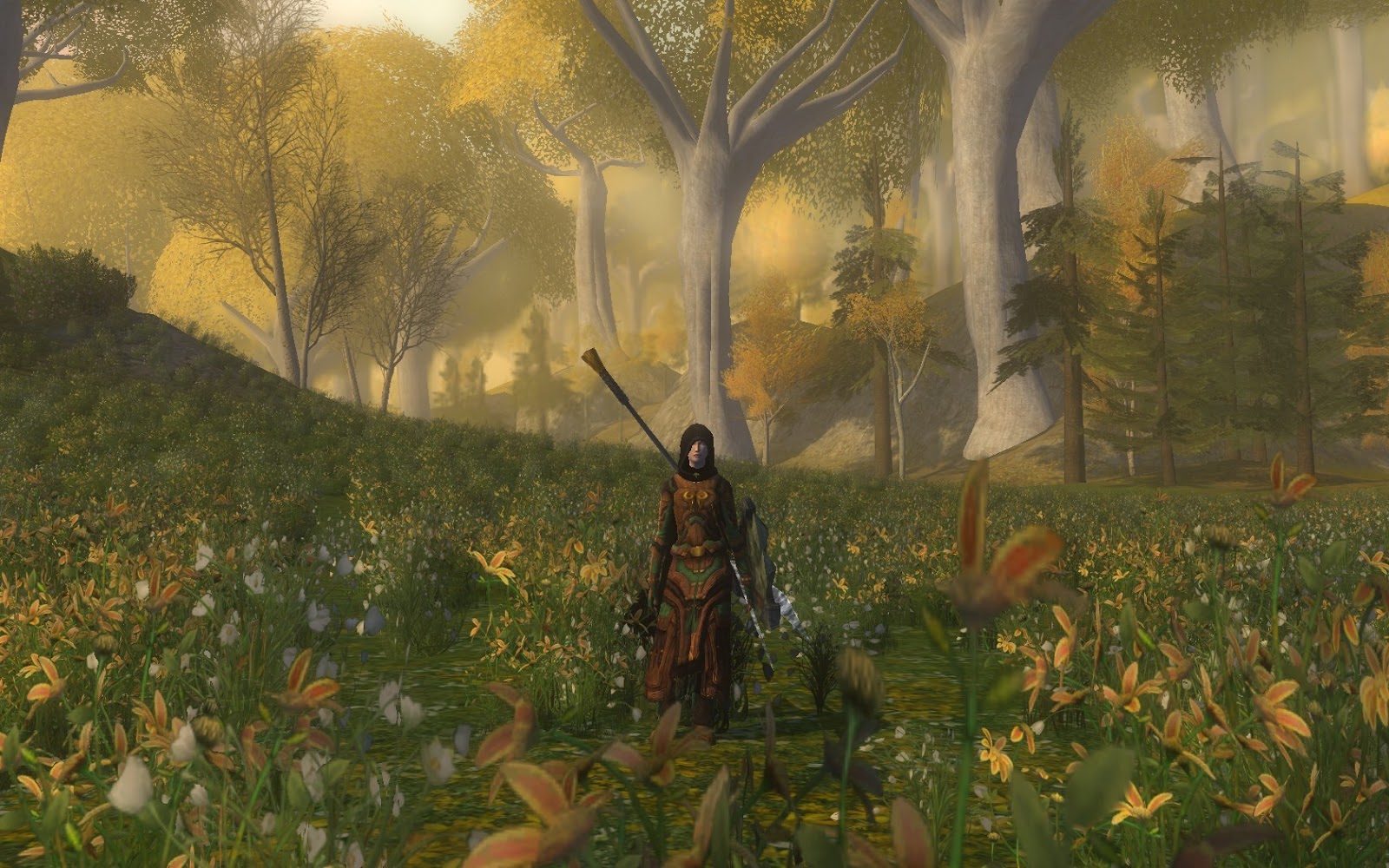
I've even gone to the dark side and paid monthly to play an MMO! Paid real money! This is the genre that World of Warcraft made popular - think Leeroy Jenkins and anecdotes about people playing so much they forget to eat. While I am proud to say I've never played WoW - the game I played was based on LOTR, and I enjoyed coming up with cool and grammatically correct Elvish names for my weapons (NERD!) - it's still not the sort of thing you brag about to your scientist colleagues and non-gamer friends. I don't necessarily regret the countless hours I spent wandering around Middle-Earth, but even at the time I knew I was using it as a coping strategy for depression.
Why do people play games? More specifically, why do some people get totally swept up in gaming, and not others? What needs or desires do games fulfill in the human psyche?
I didn't exactly ask myself these questions right away. While some part of me knew that I was playing too much, that not going into work (in so far as grad school counts as "work") was a real sign that things were not okay in my life, those types of thoughts were exactly what I was avoiding by gaming instead. Then at some point I came across The Guild and everything made sense: the first episode starts with the main character breaking up with her therapist in the middle of a raid.
I think the comedic value of breaking up with your therapist is obvious regardless of whether you've been to therapy, but I don't actually remember if I had a therapist at that point. I do remember, later, attempting to explain to my therapist the insights I had on the Psychology of Gaming that surely came from The Guild: there are clear goals and rewards, a continuous sense of advancement, an adjustable difficulty setting, all while acting like the perfect version of yourself and wearing immaculate armor. When your real life (RL) demons become too much, you can always conquer dragons in the gaming world and collect your well earned loot.
The Guild is worth watching, obvi, but I watched it again for you and picked off these quotes:
The Guild is ultimately about people who play an immersive, social role playing game, which is why so many people get completely drawn into MMOs; but there are other psychological needs that different types of games meet. Many types, but especially RPG and adventure games, provide a sense of escapism to an alternate reality, in which you act out specific roles. Adventure games in particular (for example, Myst) involve puzzle-solving, but instead of a static crossword or sudoku you are solving puzzles in an immersive world to advance a story. First-person shooter (FPS) games (for example, Halo) are sometimes also set in other (alien) worlds and thus provide escapism, but often they attempt to be realistic war games. I'm not generally drawn to these, but I find a gross satisfaction in pulling off a head shot - a test of hand/eye coordination and BOOM! another enemy is down. FPS games make me afraid for humanity, and of myself.
Strategy games are a different type of puzzle solving, but long-term; they are often about managing resources and as such involve taking a character out into the world to explore. The game I played most in middle-school to high-school, and even college, was a fantasy strategy game called Heroes of Might and Magic. Explore the map to gather resources, build an army, find and defeat your foes. It was a turn-based strategy, so I had plenty of time to decide my next move. (I tend to take a long time deciding....) Real-time strategy games can offer more of an adrenalin rush, but I personally think they depend too much on clicking speed. Starcraft is a popular example of these.
Then there are the social aspects of games. You can play with people or against people, whether strangers or friends, for most of the game types I mentioned. Humans are social creatures, so the benefits of gaming with other humans are self-evident. I tend to prefer solo games, but occasionally in my MMO life I would group up with 6, 12, or 24 people to defeat monsters for epic rewards. After a few times I could tell why people get addicted. It was an incredibly focused and intense experience. If only I could find such focus in my research!
And then there was HabitRPG. One day I told facebook, "I wish real life were more like games," and magically a friend told me about Habit. It was exactly what I needed. Send a work email, gain experience and gold. Use that gold for whatever rewards you like: health potions (so you won't die), a fancy new sword, or real-life cake. Perform bad habits, which you set for yourself, and you lose health. Good habits, and checking off To Do items, gain you experience and gold. Level up to increase your stats! All of a sudden, the "Submit that proposal and DING! Level up!" scenario was a real (fake) possibility!
Habit is now my To Do list, and my Dailies list (in MMOs, these are quests you can do every day), and occasionally I grow a baby dragon into a big dragon for my character to ride. I have long since bought the top level weapons and armor, but I don't want to pay real money to start anew at level 1. Maybe this means everything will be easy once I reach RL level 50, but meanwhile in my Habit game/life, I make things as difficult as needed, because if a game/life is too easy, what's the point?
Perhaps that's good advice from gaming that I can bring to my real life character. (By that I mean myself....) If things seem difficult, that is a sign that they are worth going for; epic loot could be gained, after all. And if they really are too difficult, I can always take a break to play a game and kill a dragon.
There is more on the subject of the Psychology of Gaming to talk about, like for example why the hell Candy Crush and FarmVille are so popular, why unlocking levels and achievements is so satisfying, etc. These can probably be explained by various psychological studies into the benefits of seemingly mindless tasks, or focused attention, but I will leave it to you... there are plenty of TED talks for the interested. As to why some people get drawn into games and some don't, that could be a mixture of personality and susceptibility to addiction. It really is interesting how much of a stark contrast there is between people who play games and people who don't get the appeal at all!
I was also going to talk about the experience of losing my ability to play games, but that is too traumatic... I may have a permanent fear that my mouse will start to move by itself, but I have a virus-free computer now and everything is right with the world. EVERYTHING IS OKAY. I AM SAFE.
Excuse me while I go kill some dragons....
I don't like to think of myself as a "gamer," a word which invariably is associated with teenage boys secluded in basements and poor life choices. But, I play a lot of games and always have, so I guess the term fits. Whether an involved story-driven RPG or adventure game, a Strategy game, an FPS on my brother's console, or Minesweeper and Solitaire, they all have their place. They've all suited some purpose at some point in my life, both healing and destructive.
I've even gone to the dark side and paid monthly to play an MMO! Paid real money! This is the genre that World of Warcraft made popular - think Leeroy Jenkins and anecdotes about people playing so much they forget to eat. While I am proud to say I've never played WoW - the game I played was based on LOTR, and I enjoyed coming up with cool and grammatically correct Elvish names for my weapons (NERD!) - it's still not the sort of thing you brag about to your scientist colleagues and non-gamer friends. I don't necessarily regret the countless hours I spent wandering around Middle-Earth, but even at the time I knew I was using it as a coping strategy for depression.
 |
| Lorien is a good place to be sad. |
Why do people play games? More specifically, why do some people get totally swept up in gaming, and not others? What needs or desires do games fulfill in the human psyche?
I didn't exactly ask myself these questions right away. While some part of me knew that I was playing too much, that not going into work (in so far as grad school counts as "work") was a real sign that things were not okay in my life, those types of thoughts were exactly what I was avoiding by gaming instead. Then at some point I came across The Guild and everything made sense: the first episode starts with the main character breaking up with her therapist in the middle of a raid.
I think the comedic value of breaking up with your therapist is obvious regardless of whether you've been to therapy, but I don't actually remember if I had a therapist at that point. I do remember, later, attempting to explain to my therapist the insights I had on the Psychology of Gaming that surely came from The Guild: there are clear goals and rewards, a continuous sense of advancement, an adjustable difficulty setting, all while acting like the perfect version of yourself and wearing immaculate armor. When your real life (RL) demons become too much, you can always conquer dragons in the gaming world and collect your well earned loot.
 |
| Loot. It's also a verb. |
The Guild is worth watching, obvi, but I watched it again for you and picked off these quotes:
"at the end of the night you can always just log off"
"cartoon characters who let me feel a sense of achievement in an imaginary world"
"I've never really felt like I had any control over my life. I think that's why I like video games. It is so much easier to measure life in experience points."
"BAM! Rent Check! Die! Meter Maid!"
"If I get rejected, what's the down side? I'll cry a lot. I'll probably do that anyway."
"I can't wait until I'm the one picking someone instead of someone picking me. This way there's no way that I can be rejected!"
"I've never gotten into Real Time Strategy games.... How is that fun? I have a hard enough time coping with real life in real time!"Suffice it to say I completely empathized with the main character. There is a fine line, I found, between a helpful coping strategy and a destructive one, but it didn't take cutting down on gaming to feel better. Quite the reverse. Once I was able to actively address my depression, I was able to appreciate the positive aspects of gaming instead of feeling guilty about it, before, during, and after. The playing itself wasn't nearly so destructive as the guilt.
 |
| Plus, it's so pretty! |
The Guild is ultimately about people who play an immersive, social role playing game, which is why so many people get completely drawn into MMOs; but there are other psychological needs that different types of games meet. Many types, but especially RPG and adventure games, provide a sense of escapism to an alternate reality, in which you act out specific roles. Adventure games in particular (for example, Myst) involve puzzle-solving, but instead of a static crossword or sudoku you are solving puzzles in an immersive world to advance a story. First-person shooter (FPS) games (for example, Halo) are sometimes also set in other (alien) worlds and thus provide escapism, but often they attempt to be realistic war games. I'm not generally drawn to these, but I find a gross satisfaction in pulling off a head shot - a test of hand/eye coordination and BOOM! another enemy is down. FPS games make me afraid for humanity, and of myself.
Strategy games are a different type of puzzle solving, but long-term; they are often about managing resources and as such involve taking a character out into the world to explore. The game I played most in middle-school to high-school, and even college, was a fantasy strategy game called Heroes of Might and Magic. Explore the map to gather resources, build an army, find and defeat your foes. It was a turn-based strategy, so I had plenty of time to decide my next move. (I tend to take a long time deciding....) Real-time strategy games can offer more of an adrenalin rush, but I personally think they depend too much on clicking speed. Starcraft is a popular example of these.
 |
| "Gil-galad was an Elven-king...." |
Then there are the social aspects of games. You can play with people or against people, whether strangers or friends, for most of the game types I mentioned. Humans are social creatures, so the benefits of gaming with other humans are self-evident. I tend to prefer solo games, but occasionally in my MMO life I would group up with 6, 12, or 24 people to defeat monsters for epic rewards. After a few times I could tell why people get addicted. It was an incredibly focused and intense experience. If only I could find such focus in my research!
And then there was HabitRPG. One day I told facebook, "I wish real life were more like games," and magically a friend told me about Habit. It was exactly what I needed. Send a work email, gain experience and gold. Use that gold for whatever rewards you like: health potions (so you won't die), a fancy new sword, or real-life cake. Perform bad habits, which you set for yourself, and you lose health. Good habits, and checking off To Do items, gain you experience and gold. Level up to increase your stats! All of a sudden, the "Submit that proposal and DING! Level up!" scenario was a real (fake) possibility!
Habit is now my To Do list, and my Dailies list (in MMOs, these are quests you can do every day), and occasionally I grow a baby dragon into a big dragon for my character to ride. I have long since bought the top level weapons and armor, but I don't want to pay real money to start anew at level 1. Maybe this means everything will be easy once I reach RL level 50, but meanwhile in my Habit game/life, I make things as difficult as needed, because if a game/life is too easy, what's the point?
Perhaps that's good advice from gaming that I can bring to my real life character. (By that I mean myself....) If things seem difficult, that is a sign that they are worth going for; epic loot could be gained, after all. And if they really are too difficult, I can always take a break to play a game and kill a dragon.
There is more on the subject of the Psychology of Gaming to talk about, like for example why the hell Candy Crush and FarmVille are so popular, why unlocking levels and achievements is so satisfying, etc. These can probably be explained by various psychological studies into the benefits of seemingly mindless tasks, or focused attention, but I will leave it to you... there are plenty of TED talks for the interested. As to why some people get drawn into games and some don't, that could be a mixture of personality and susceptibility to addiction. It really is interesting how much of a stark contrast there is between people who play games and people who don't get the appeal at all!
I was also going to talk about the experience of losing my ability to play games, but that is too traumatic... I may have a permanent fear that my mouse will start to move by itself, but I have a virus-free computer now and everything is right with the world. EVERYTHING IS OKAY. I AM SAFE.
Excuse me while I go kill some dragons....
 | ||
| Noro lim! |
Wednesday, June 11, 2014
Coming Out Depressed
This past May was apparently Mental Health Awareness Month in the USA. I only knew about it because a cartoon appeared on my twitter feed:

The issue is complex, but the point is simple. We don't treat mental health issues the same as physical health issues, and this is to the detriment of our mental health.
Someone I follow (celebrity, not personal friend) shared this, adding something like "I have anxiety and depression and I'm not ashamed." This is a great little cartoon, and a great message to share, but even thinking about re-tweeting it initiated a mini freak-out because I am the person in panel four and I am definitely ashamed... I couldn't re-tweet that part of the message because I wasn't out. I have anxiety and depression, and I'm mostly in the closet about it.
There are a lot of reasons people might not want to talk openly about their mental health. Being in the mental health closet is obviously very different than being in the closet for other reasons - queer, atheist, brony - but I think the unifying factor is a lack of general public understanding and acceptance.
Most of us can imagine what someone else feels when they have a physical illness. So when someone asks, "I haven't seen you in a couple days, are you okay?" you can reply, "I had the flu," and trust that they understand what you mean. They'll say, "Ugh, that sucks," and you both get on with your day. But there is no such universal understanding of mental illness. There is no trust that I can say, "I was depressed," *shrug*, and expect most people to understand. Often just thinking about feeling sad will make me feel sad, so it's not like I want to invite a discussion of sadness. Plus, I don't want to have to deal with other people's reactions to my depression on top of my depression.
What are the things I'm afraid of hearing? Things like:
Yes, I know, these may seem like perfectly good responses. But no, I do not want to feel different and special because sometimes my brain decides to make me feel like shit. That is not a cool thing to feel special about.
Here's how I would want to reply to the above reactions:
The problem is, people mean well. So instead of replying in a satisfying way, I would be stuck managing someone else's feelings at a time when I can't even manage my own. So most of the time, I stay in the closet.
Perhaps you're wondering what the right thing to say is? I can't help you there. I could think of some things that wouldn't bother me personally, but it really depends on the person and the situation and your relationship, and probably also the weather. "Ugh, that sucks" is a good place to start. Increasing your understanding of mental health, especially depression, is a good next step; I'm tempted to try to correct some common misconceptions here, but there are plenty of articles, blogs, and TED talks for the interested.
I guess posting this will mean coming out depressed. I can imagine all kinds of awkward interactions it could result in, especially because I never know who reads this. But I also can imagine that there are many more people who understand than I suspect, because we all rarely talk about it.
P.S. If you are a closeted brony and need someone to talk to, I have seen the documentary and think I am beginning to understand. I won't judge you. Friendship is Magic.
The issue is complex, but the point is simple. We don't treat mental health issues the same as physical health issues, and this is to the detriment of our mental health.
Someone I follow (celebrity, not personal friend) shared this, adding something like "I have anxiety and depression and I'm not ashamed." This is a great little cartoon, and a great message to share, but even thinking about re-tweeting it initiated a mini freak-out because I am the person in panel four and I am definitely ashamed... I couldn't re-tweet that part of the message because I wasn't out. I have anxiety and depression, and I'm mostly in the closet about it.
There are a lot of reasons people might not want to talk openly about their mental health. Being in the mental health closet is obviously very different than being in the closet for other reasons - queer, atheist, brony - but I think the unifying factor is a lack of general public understanding and acceptance.
Most of us can imagine what someone else feels when they have a physical illness. So when someone asks, "I haven't seen you in a couple days, are you okay?" you can reply, "I had the flu," and trust that they understand what you mean. They'll say, "Ugh, that sucks," and you both get on with your day. But there is no such universal understanding of mental illness. There is no trust that I can say, "I was depressed," *shrug*, and expect most people to understand. Often just thinking about feeling sad will make me feel sad, so it's not like I want to invite a discussion of sadness. Plus, I don't want to have to deal with other people's reactions to my depression on top of my depression.
What are the things I'm afraid of hearing? Things like:
- Oh no, what's wrong?
- How can I help?
- But you're great and awesome!
- I love you :)
Yes, I know, these may seem like perfectly good responses. But no, I do not want to feel different and special because sometimes my brain decides to make me feel like shit. That is not a cool thing to feel special about.
Here's how I would want to reply to the above reactions:
- Nothing specific is wrong, it doesn't work like that, and yet I can't stop asking myself that all the time hoping if only I could figure out what's wrong I would stop feeling like shit, but thank you for reminding me I feel like this for no good reason.
- No, there is nothing you can do about it, but thanks for making this about you.
- I'm glad you think I'm great and awesome. It must be fun having those feelings.
- Sorry, but I won't magically feel better because you love me. Stop smiling at me like that!
The problem is, people mean well. So instead of replying in a satisfying way, I would be stuck managing someone else's feelings at a time when I can't even manage my own. So most of the time, I stay in the closet.
Perhaps you're wondering what the right thing to say is? I can't help you there. I could think of some things that wouldn't bother me personally, but it really depends on the person and the situation and your relationship, and probably also the weather. "Ugh, that sucks" is a good place to start. Increasing your understanding of mental health, especially depression, is a good next step; I'm tempted to try to correct some common misconceptions here, but there are plenty of articles, blogs, and TED talks for the interested.
I guess posting this will mean coming out depressed. I can imagine all kinds of awkward interactions it could result in, especially because I never know who reads this. But I also can imagine that there are many more people who understand than I suspect, because we all rarely talk about it.
P.S. If you are a closeted brony and need someone to talk to, I have seen the documentary and think I am beginning to understand. I won't judge you. Friendship is Magic.
Monday, June 2, 2014
Belief
No.
But let me rephrase the question:
"Do you believe that the theory of evolution is currently the best way to explain the data?"
Why, yes I do. Thanks for asking!
You can believe in a whole lot of things. You can believe in yourself, in the inherent goodness of humanity, in God, in your friends, in ghosts. If you live in Baltimore, you can just Believe. But it makes no sense to believe IN a scientific theory, or to assume that others do so. Sometimes people may say they believe in evolution and mean they believe the theory fits the data, but sometimes people are sloppy with their language and should know better. It makes no more sense to believe in evolution than it does to believe in electromagnetism.

It may seem like I'm making a minor point here - okay yes, I am, it's what I do - but what I'm getting at is that failing to make this distinction is the cause of a lot of the perceived conflict between science and religion. Believing in something is like having faith, and no one can take that away from you. But evolutionary biologists don't have faith that the theory of evolution is correct - they have data. The key thing about this kind of "science belief" is that new data can prove the theory wrong, thus changing beliefs about how well the theory works. The "faith beliefs" can change too, i.e. I can believe in the goodness of humanity but change my mind when faced with traumatic events; however, "the goodness of humanity" is not a testable theory. It would be odd to believe in a chair, but it is reasonable to believe that a chair exists (perhaps because you are sitting on it). This is what I mean by science belief: it connects a theory to data in an objective way.
A better way to phrase the distinction might be justified vs. unjustified belief. Scientific beliefs are (mostly) justified by data, i.e. they are empirical. Justification can also be rational, i.e. without recourse to data but appealing to logic. Unjustified beliefs can be based on intuition, or on preference (believing something because you want it to be true); or, like religious belief, they could be based on profound personal experiences. They are both legitimate types of belief and we all have them.
Now, you might think that justified beliefs are more strongly held and unjustified beliefs are easier to change. To the contrary, justified beliefs are far more adaptable - the data may change, your reasoning may be shown to be false - and I think most of the time we make no distinction between these types of belief in our own heads. There are just things we know, and we do not constantly ask ourselves how we know them. But the distinction matters. Unjustified beliefs are much harder to change.
To me, believing in something is like having faith in something without empirical or rational justification. And this is exactly why I hate the question, "Do you believe in evolution?" It is like asking, "Do you believe in gravity?" I'm not floating into space, so, yes? But Newtonian gravity is wrong on cosmological scales, so no? Or did you mean relativistic gravity? What are you talking about?! It is a meaningless question.
Part of the deal of abandoning certainty is a commitment to questioning your beliefs. This gets tedious. Humans are not designed to do this. But, it is irrational to believe, contrary to the data, that humans are rational beings. Being uncertain is uncomfortable, thus abandoning certainty means valuing the truth above personal comfort. Many people place utmost value in concepts like goodness or justice, or in increasing well-being for themselves and others. But valuing truth means asking, "What is good? What is well-being?" and being okay with not knowing the answer. Valuing truth means avoiding untruths most of all. And now that I've slipped from epistemology to morality and totally derailed myself, here's an apt quote from Dune:
My father once told me that respect for the truth comes close to being the basis for all morality. "Something cannot emerge from nothing," he said. This is profound thinking if you understand how unstable "the truth" can be.I've recently discovered (in the past months or year) that I seem to place a high value in the truth, and I find myself thinking, when I disagree with something on the internet (like ALL THE TIME), "Well, they just don't value truth as much as I do." (Wow, that sounds pretty arrogant after writing it out loud... no one thinks to themselves, "I don't care what is true! La la la la!" Probably. But that's not what I mean...) Perhaps not valuing truth as much means they are less wary of the instability of "truth" or more trusting of sources of information. But whenever someone posts something and comments, "This is unbelievable!!!!!!" I always want to respond, "Then maybe you shouldn't believe it? And also maybe calm down with the exclamation marks a bit?"
- Frank Herbert, Dune
Another way people may not "value truth as much" is when there's a disagreement; they may get defensive or take it personally because not having any perceived conflict is more important than hashing out the issues; or, having their opinions heard is more important than finding out whether these opinions conform to reality. I'm not making judgments here; these values are all valid. Part of the difference in what people value may be temperament. Personally, not only am I a professional scientist, but in my free time I read about psychology, epistemology, neuroscience, and other things that address why we believe what we believe and how we know what we know. So, I value truth highly, and others may not, and that's okay.

Getting back to the justified vs. unjustified types of belief... I think it's fair to say that justified belief is more trustworthy. Justification should be found for unjustified beliefs whenever possible, and basic assumptions, facts, and motivations that underlie belief checked often. But, though I value truth, I recognize that some belief can never be justified; further, these unjustified beliefs address some of the most profound and beautiful aspects of human existence.
This distinction is often discussed in terms of the conflict between science and religion. For example, no empirical data can address the question of God's existence, and though there may be reasoned arguments, surely very few people believe in God because they were convinced by the Kalam Cosmological Argument; it is rather something they know, because they have faith. Acting as if data or logic has anything to do with spirituality is a good way for atheists to completely miss the point and convince no one (as if convincing were a worthwhile endeavor, which it is not).
On the other hand, ignoring the overwhelming justification of a scientific theory because it conflicts with unjustified religious belief is a good way to bring the progress of society to a screeching halt. The error lies in failing to recognize those aspects which are justifiable - those which come into contact with data - and failing to separate them from questions of value, rightness, love, spirituality, etc.
Stephen Jay Gould has famously referred to science and religion as "non-overlapping magisteria," such that science deals with questions of fact and religion with morality and meaning. I may have agreed at one time, but now it is obvious to me that of course they overlap! Most religions have in their dogma explicit questions of fact; science, being a human endeavor, is not immune from questions of morality and meaning, and of course religion does not have a monopoly on morality and meaning in the first place. It seems "science" and "religion" are not the correct terms, and I don't know what the correct terms are, which may be why this blog post has been in draft form for years. I guess I will have to live with the uncertainty.
It is one of the triumphs of the human that he can know a thing and still not believe it.
- John Steinbeck, East of Eden
Monday, March 3, 2014
Inspirational
You know those inspirational messages that pop up on social media? Sometimes they're a quotation from a semi-famous person, sometimes just a sentence or phrase, and your friend seems to think they contain wisdom worth sharing. Sometimes they're your friend's own wisdom they came up with themselves. Well, I've come up with one that pretty much sums up them all. No further inspirational messages need to be shared, now that we have this:

Whenever I see a message like this, some or all of these thoughts go through my head:
But I stop myself all the time from posting little snippets of "wisdom" because I eventually think they are just as trivial, or not good advice for some reason or other, or because I don't want to tell people how to be. (And I hate everything.) As if I could get people to think more critically about the world just by telling them to.
For example, when I see trivial nonsense like the above, I want to say, "But it's human to do or feel bad things, so stop beating yourself up about it! Good and bad are meaningless social constructions anyway! What's important is to do what you do and feel what you feel! But that is just as meaningless, so don't listen to me, please carry on with your life!" So instead I say nothing.
I think most of the reason this stuff bothers me is because I don't think we need to be telling each other what's the right way to think or feel or act. There is no right way to think or feel or act. We need to stop giving each other advice and focus on understanding each other better. But of course, that is itself advice on the right way to be. I can't win!
Fuck it.
DO OR FEEL GOOD THINGS, everyone.
Whenever I see a message like this, some or all of these thoughts go through my head:
- That is trivial and meaningless.
- That is not even good advice.
- STOP TELLING ME HOW TO BE!
- I guess some people get inspiration from this... why do I hate everything?
But I stop myself all the time from posting little snippets of "wisdom" because I eventually think they are just as trivial, or not good advice for some reason or other, or because I don't want to tell people how to be. (And I hate everything.) As if I could get people to think more critically about the world just by telling them to.
For example, when I see trivial nonsense like the above, I want to say, "But it's human to do or feel bad things, so stop beating yourself up about it! Good and bad are meaningless social constructions anyway! What's important is to do what you do and feel what you feel! But that is just as meaningless, so don't listen to me, please carry on with your life!" So instead I say nothing.
I think most of the reason this stuff bothers me is because I don't think we need to be telling each other what's the right way to think or feel or act. There is no right way to think or feel or act. We need to stop giving each other advice and focus on understanding each other better. But of course, that is itself advice on the right way to be. I can't win!
Fuck it.
DO OR FEEL GOOD THINGS, everyone.
Monday, May 20, 2013
Nautilus
I'm in love with this new magazine, Nautilus. It is named after "a remarkable intersection of science, math, myth, and culture", a mollusk with a fractal logarithmic spiral in its shell. First of all, I love logarithms! In a weird cosmic synchronicity, the random (from a list of names?) band name given to me in Rock Band was "Just a Matter of Logarithms" and you'd better believe I kept it. Second of all, I love science, math, myth, AND culture! I love all of those things! So I was pretty excited to find out about this magazine.
The first article I read, I chose because of the title, "Metaphors Are Us". (I love metaphors!) I was fascinated to find out how metaphors, empathy, morality, and neurology all come together in a beautiful and complicated mess of humanity. Our ability to feel empathy, to connect to someone else's pain and feel it ourselves, relates to very specific functions of the brain:
I haven't finished Issue 1 yet because I was distracted by Issue 0, which I got around to reading today. I probably won't write about all of the issues, but here are more reasons I love Nautilus:
In one article, I learn that music is fractal, and so is a coastline!A fractal pattern looks the same on large scales as it does on small ones; put another way, the parts of a fractal system look similar to the entire system. I'm not entirely sure how music is fractal, but it's still cool!
In another article, I get some fascinating insight into psychological epistemology:
So anyway, this is very fascinating for psychological epistemology: the easier something is for us to understand, the more likely we will accept it as true. Simple and elegant solutions just seem right. Things that don't make "horse sense" are met with skepticism. And when we hear something over and over again it becomes much easier to believe, even when it has no relation to reality. (I'm glaring meaningfully in your direction, Fox "News"....)
A third article had me at its title, "Where Science and Story Meet", because I've been wanting to read "The Storytelling Animal" but it's not at my local bookstore. The article was not quite what I expected, but that's good; if I only ever learned what I expected to learn, then I probably wouldn't actually learn very much. Anyway, the unexpected thing I learned was that
There's more Nautilus to read, and learn and think about, but this story is over for now!
The first article I read, I chose because of the title, "Metaphors Are Us". (I love metaphors!) I was fascinated to find out how metaphors, empathy, morality, and neurology all come together in a beautiful and complicated mess of humanity. Our ability to feel empathy, to connect to someone else's pain and feel it ourselves, relates to very specific functions of the brain:
While in a brain scanner, you’re administered a mild shock, delivered through electrodes on your fingers. All the usual brain regions activate, including the anterior cingulate. Now you watch your beloved get shocked in the same way. The brain regions that ask, “Is it my finger or toe that hurts?” remain silent. It’s not their problem. But your anterior cingulate activates, and as far as it’s concerned, “feeling someone’s pain” isn’t just a figure of speech. You seem to feel the pain too.Humans also appear to abstract disgust as well as pain. The insula, which processes gustatory disgust in all mammals (to make us spit out poison, for example), also activates when we think about some shameful thing we did. This "moral disgust" also relates to humans as social creatures:
Many cultures inculcate their members into acquiring symbols that repel, doing so by strengthening specific neural pathways from the cortex to the insula, pathways that you’d never find in another species. Depending on who you are, those pathways could be activated by the sight of a swastika or of two men kissing. Or perhaps by the thoughts of an abortion, or of a 10-year-old Yemeni girl forced to marry an old man. Our stomachs lurch, and we feel the visceral certainty of what is wrong. And we belong.That beautiful paragraph makes me want to read more by the article's author, Robert Sapolsky.
I haven't finished Issue 1 yet because I was distracted by Issue 0, which I got around to reading today. I probably won't write about all of the issues, but here are more reasons I love Nautilus:
In one article, I learn that music is fractal, and so is a coastline!A fractal pattern looks the same on large scales as it does on small ones; put another way, the parts of a fractal system look similar to the entire system. I'm not entirely sure how music is fractal, but it's still cool!
In another article, I get some fascinating insight into psychological epistemology:
According to Rolf Reber, a psychologist at the University of Bergen, in Norway, “there is growing empirical evidence that people use a common source for evaluations of both beauty and truth.” The source he refers to is processing fluency, the state of being able to easily parse and understand a situation. Essentially, the more easily we can get a handle on a situation (because it’s mathematically simple, we’ve seen it many times before, it’s symmetrical, etc.), the more likely it is to seem right.This explains so much about people and why they believe what they do! (I have just now decided to call this psychological epistemology. It probably already has a more appropriate and boring name like the "psychology of belief" but... boring.)
So anyway, this is very fascinating for psychological epistemology: the easier something is for us to understand, the more likely we will accept it as true. Simple and elegant solutions just seem right. Things that don't make "horse sense" are met with skepticism. And when we hear something over and over again it becomes much easier to believe, even when it has no relation to reality. (I'm glaring meaningfully in your direction, Fox "News"....)
A third article had me at its title, "Where Science and Story Meet", because I've been wanting to read "The Storytelling Animal" but it's not at my local bookstore. The article was not quite what I expected, but that's good; if I only ever learned what I expected to learn, then I probably wouldn't actually learn very much. Anyway, the unexpected thing I learned was that
The pleasurable feeling that our explanation is the right one—ranging from a modest sense of familiarity to the powerful and sublime “a-ha!”—is meted out by the same reward system in the brain integral to drug, alcohol, and gambling addictions.Not only are humans good at pattern recognition, but figuring out the pattern produces happy chemicals in the brain! Solving that equation, putting that jigsaw piece in the right place, or hearing someone else tell you something you already know is true - putting things together into a coherent story - makes us feel good, while not solving that equation or puzzle, or having a friend present you with facts that contradict your beautiful story, makes us hate math and angry at our friends. This pretty much explains why I like to do jigsaw puzzles when I'm stressed, and adds to theories I have about the psychology of gaming. (Or maybe theories other people have that I've read...)
There's more Nautilus to read, and learn and think about, but this story is over for now!
Thursday, April 25, 2013
Quiet
I got the book Quiet: The Power of Introverts in a World That Can't Stop Talking for Christmas, and honestly I wasn't expecting that much. I had seen her TED talk and thought it was great, but I couldn't imagine how she would fill a whole book. Introverts are awesome, and everyone needs to calm down and stop talking so much - got it. What else is there to say?
As you may have guessed from the fact that I am blogging about it at all, it turns out it had some pretty interesting and unexpected things to say! I highly recommend the book to anyone who is an introvert, or an extrovert who knows introverts, or a parent of a quiet child, or a human being.
One of the more interesting things I learned was about the neuroscience behind temperament, and relatedly, why oral exams are a horrible way to judge knowledge and intelligence. If I could have told my examiners, "Look, I am a 'high-reactive' type of person, which means my amygdala goes into high gear in stimulating situations like being around people and trying new things, so in these situations my neocortex is spending considerable effort to soothe my amygdala, thus interfering with my ability to speak on the fly and 'think on my feet', so kindly bugger off, and anyway what does thinking on your feet have to do with being a good scientist, aren't good results obtained with careful diligence and error-catching?!".... then perhaps I could have saved myself a few years of stress and anxiety. But somehow I don't think it would have gone over too well. Luckily, giving scientific talks has none of the stress-inducing JUDGMENT of exams, and I usually eat some dark chocolate right before speaking. (To stimulate the release of dopamine, of course.)
I interpreted this part of the book as an explanation for why mantras work. Specifically, this quote:
"Quiet" covers the basics of introversion/extroversion for people who spend too much time at parties to learn about this fundamental aspect of human personality. (JUST KIDDING extraverts, I love you! but seriously pick up a book sometime okay?) It dispels myths about introverts, such as they are always shy and depressed - though this awesome cartoon might be the best explanation of introversion. "Quiet" also talks about related aspects of temperament like sensitivity (though 30% of sensitive types are extraverts if I remember correctly), which describes people who are "keen observers" who "have difficulty when being observed or judged", "tend to be philosophical" and "dislike small talk", and who "feel exceptionally strong emotions" and "process information about their environments unusually deeply." (p. 136) Does that sound like someone you know?
There are a bunch of other insights that could be drawn from the book, from politics to the media to religion to business to education to relationships.... basically, anything that involves people, because people are either introverts or extraverts or both. So that pretty much covers everything.
But you don't have to take my word for it! Go read it yourself! If you want to. Or you can just take my word for it. It really doesn't matter either way. Do whatever you want! Just calm down.
As you may have guessed from the fact that I am blogging about it at all, it turns out it had some pretty interesting and unexpected things to say! I highly recommend the book to anyone who is an introvert, or an extrovert who knows introverts, or a parent of a quiet child, or a human being.
One of the more interesting things I learned was about the neuroscience behind temperament, and relatedly, why oral exams are a horrible way to judge knowledge and intelligence. If I could have told my examiners, "Look, I am a 'high-reactive' type of person, which means my amygdala goes into high gear in stimulating situations like being around people and trying new things, so in these situations my neocortex is spending considerable effort to soothe my amygdala, thus interfering with my ability to speak on the fly and 'think on my feet', so kindly bugger off, and anyway what does thinking on your feet have to do with being a good scientist, aren't good results obtained with careful diligence and error-catching?!".... then perhaps I could have saved myself a few years of stress and anxiety. But somehow I don't think it would have gone over too well. Luckily, giving scientific talks has none of the stress-inducing JUDGMENT of exams, and I usually eat some dark chocolate right before speaking. (To stimulate the release of dopamine, of course.)
I interpreted this part of the book as an explanation for why mantras work. Specifically, this quote:
In fact, a recent fMRI study shows that when people use self-talk to reassess upsetting situations, activity in their prefrontal cortex increases in an amount correlated with a decrease of activity in their amygdala. (p. 118)Fear is a pretty basic emotion governed by the primitive part of the brain, but we can learn to get over it by activating our powerful front brain. However, the fear response of the amygdala never goes away completely, so when the cortex is otherwise occupied, such as in stressful situations, we may find that we do not have our shit together as much as we thought we did. Shit.
"Quiet" covers the basics of introversion/extroversion for people who spend too much time at parties to learn about this fundamental aspect of human personality. (JUST KIDDING extraverts, I love you! but seriously pick up a book sometime okay?) It dispels myths about introverts, such as they are always shy and depressed - though this awesome cartoon might be the best explanation of introversion. "Quiet" also talks about related aspects of temperament like sensitivity (though 30% of sensitive types are extraverts if I remember correctly), which describes people who are "keen observers" who "have difficulty when being observed or judged", "tend to be philosophical" and "dislike small talk", and who "feel exceptionally strong emotions" and "process information about their environments unusually deeply." (p. 136) Does that sound like someone you know?
There are a bunch of other insights that could be drawn from the book, from politics to the media to religion to business to education to relationships.... basically, anything that involves people, because people are either introverts or extraverts or both. So that pretty much covers everything.
But you don't have to take my word for it! Go read it yourself! If you want to. Or you can just take my word for it. It really doesn't matter either way. Do whatever you want! Just calm down.
Tuesday, April 9, 2013
Nostalgia
At some point in my young adult life, I vaguely remembered a story that was a favorite of mine as a kid and couldn't for the life of me remember what it was. I knew it contained a lion at the end, who perhaps lived in a castle. I suspected it was in a book at Grandma's house, but she had given those away long ago.
I desperately wanted to find this story again, but why? Sure, a lion living in a castle sounds pretty cool, but it wasn't the coolness of the story I cared about. There might not even be any castle! (I was pretty sure about the lion.) It was something about the almost but not quite remembering - the hope that finding this story would unlock a wave of nostalgia that I was robbed of, because I couldn't be nostalgic for something I couldn't even remember.
Many years later, after my nephew was born, I had an excuse to buy children's books. (One copy for myself, one for him!) I found an illustrated copy of the Winnie-the-Pooh books and HAD to buy the DVD of the old cartoons - I had to clarify my vague memories of them getting lost in the woods, and of Tigger getting stuck in the tree. When I would visit and everyone else was tired of watching Winnie-the-Pooh, I would make them put it on, because obviously the DVD was a gift to myself.
When these relics of childhood are found again, they become more than they are. They are valued for their association with happy memories and being a kid, not for themselves. Let's face it, being a kid is pretty awesome! There's something about the initial remembering - the theme song of old cartoons, an image from a story book - that just makes us happy, no matter how stupid the book or bad the cartoon. If we hadn't watched Legend all the time as kids I seriously doubt that I would love it so much now. But now, I can say with certainty that it is objectively one of the best movies of all time. (Scientific fact.)
Eventually, buying Christmas presents for my nephew led me to stumble across Richard Scarry's Best Storybook Ever containing, you guessed it, my long lost favorite story: "Is This the House of Mistress Mouse?" (Spoiler: the lion's castle house was not her house!) On top of that, there were so many other stories and images that I didn't even know that I forgot! I try to read them to my nephew even if he thinks they're boring. But I suppose he is creating his own set of things to forget, to one day half-remember. I hope there's lots.
When I was reminded of Winnie-the-Pooh today, I sort of thought about writing a blog post about the philosophy in the books, but I ended up writing something else (and it turns out someone else has written that already...) Instead I will end with one of many deep and profound Pooh quotes:
I desperately wanted to find this story again, but why? Sure, a lion living in a castle sounds pretty cool, but it wasn't the coolness of the story I cared about. There might not even be any castle! (I was pretty sure about the lion.) It was something about the almost but not quite remembering - the hope that finding this story would unlock a wave of nostalgia that I was robbed of, because I couldn't be nostalgic for something I couldn't even remember.
Many years later, after my nephew was born, I had an excuse to buy children's books. (One copy for myself, one for him!) I found an illustrated copy of the Winnie-the-Pooh books and HAD to buy the DVD of the old cartoons - I had to clarify my vague memories of them getting lost in the woods, and of Tigger getting stuck in the tree. When I would visit and everyone else was tired of watching Winnie-the-Pooh, I would make them put it on, because obviously the DVD was a gift to myself.
When these relics of childhood are found again, they become more than they are. They are valued for their association with happy memories and being a kid, not for themselves. Let's face it, being a kid is pretty awesome! There's something about the initial remembering - the theme song of old cartoons, an image from a story book - that just makes us happy, no matter how stupid the book or bad the cartoon. If we hadn't watched Legend all the time as kids I seriously doubt that I would love it so much now. But now, I can say with certainty that it is objectively one of the best movies of all time. (Scientific fact.)
Eventually, buying Christmas presents for my nephew led me to stumble across Richard Scarry's Best Storybook Ever containing, you guessed it, my long lost favorite story: "Is This the House of Mistress Mouse?" (Spoiler: the lion's castle house was not her house!) On top of that, there were so many other stories and images that I didn't even know that I forgot! I try to read them to my nephew even if he thinks they're boring. But I suppose he is creating his own set of things to forget, to one day half-remember. I hope there's lots.
When I was reminded of Winnie-the-Pooh today, I sort of thought about writing a blog post about the philosophy in the books, but I ended up writing something else (and it turns out someone else has written that already...) Instead I will end with one of many deep and profound Pooh quotes:
“I do remember, and then when I try to remember, I forget.”
Monday, February 25, 2013
Chavs
After reading "Chavs: The Demonization of the Working Class" by Owen
Jones, I felt like to do it justice would require a researched
college-style essay instead of a blog post. Not gonna happen! So go read
it! It was a great book, and at the same time I learned a little bit about UK politics and history.
But even though I won't write an essay, I've made some notes about the pages I marked while reading. Also, most of the social commentary applies in some way to the dialogue going on in America around class, but of course there are important differences... someone should write a book about that. (Or a college-style essay!)
Racism bad, Sexism bad, Classism funny!
"Chav" is a derogatory term in the UK for working-class people. The closest thing I can relate it to in US terms is "white trash" - though of course one of the things that struck me while reading this book is that there is no derogatory term for poor people in the US that isn't also about race. (So we have that going for us?) The chav stereotype is of an uneducated young street thug wearing "Burberry" or other bling; laziness, drunkenness, violence, teenage pregnancies, racism, etc. are all traits associated with chavs. Literally the term comes from the Romany word for child, 'chavi', though people often associate the term with acronyms like 'Council Housed And Violent'. Another US analogy is needed here: council housing can be considered a nicer, British version of the projects... plus without the guns.
Jones opens the book with an anecdote: he was at a dinner party with educated, middle-class, liberal friends, and yet someone cracked a joke about chavs and everyone laughed. Why has it become okay to make fun of poor people? Why are there TV shows in the UK devoted to this very thing? I think this all hinges on the popular notion that class is a choice, or a result of your choices, as opposed to things like your race or your gender, which you are born with. This is a ridiculous and upside-down idea in the face of all the data about upward mobility (i.e. the lack thereof). But if being poor is your own fault, then it's okay to make fun of you for it, and not feel guilty. Game on!
There are probably other psychological things going on though that explain why people would rather believe people are poor entirely because of their choices than that education, race, gender, parental income, the structure of society, etc. have a huge impact on your life. Part of the story is perhaps that believing that the disadvantaged deserve what they get makes it easier for the wealthy to think they are entirely responsible for their own wealth ("I BUILT IT!!!!"), rather than accepting that they were dealt a good hand and used it well.
What is the working class?
"Interestingly, more people in Britain call themselves working class now than did in 1950," despite Tony Blair's insistence that "we're all middle class now." Stock-brokers "ask with faux puzzlement: 'I work, don't I? So why aren't I working class?'" A childhood friend which Jones considered indisputably working class "felt that being working class meant being poor, while being middle class meant being educated." (p. 141)
I think the last quote is why I marked this page. Also, after reading the entire book, I'm still not entirely certain what is meant by working-class. Maybe it just sounds better than "lower-class" (after all, we have "middle" and "upper").
The lack of upward class mobility scapegoated by the lack of aspiration
A common criticism of the working-class (I might just start calling it "victim-blaming") is that they have no aspiration - that they could make their lives better but they just don't care enough to try. Jones interviews Liam, who came from a working-class background: "I literally didn't know what university was, aged sixteen. University, to be honest, was kind of where posh people go!... It's just not what we do, it's just not on the radar... You can only ever really aspire to something if you know it and understand it." (p. 174-175)
I thought the last bit was incredibly profound. How can we expect poor people to work really hard (and spend a lot of money that they don't have... at least that's how it works in America) to get a University education when they have no frame of reference for such an aspiration? Especially now when a college degree is often a ticket to live with your parents in your early 20s rather than a ticket to a good job? In poor communities in the US, the most that kids have to aspire to is to work at McDonald's and not get shot. These are the kinds of things they can point to as attainable goals. These are the jobs they are trained for with what our education system is providing them.
The "get a job" argument, i.e. "try harder," i.e. "it's your fault you're poor"
Perhaps this is just a variant of the above "victim-blaming" excuse, both of which stem from the assumption that people have complete and total control over their own lives no matter what... But as it turns out, in the UK "the majority of people living in poverty actually have a job." New Labour (close enough to Democrats) attempted to tackle this problem, but they did it by "allowing the market to run amok," according to Jones. A Labour MP (Congressperson) describes this as introducing tax credits and redistributing wealth by forcing people into the lowest paid jobs: "In that way, you become the guilty person if you can't afford to dig yourself out of poverty. There's a Victorian, patronizing attitude towards working people." All the while, the minimum wage has been allowed to become less and less meaningful. (p. 201-202)
If there were one word to describe the 'chav' stereotype, patronizing would be it.
Chavs are all racist idiots who blame immigrants for their problems
If Children of Men taught me anything, it's that the British hate immigrants. The British National Party (one of those minor Nth parties that other democracies have) represents those sentiments. Hackney (a town? a part of London? something like that...) got a lot of votes in the 70s for the National party, but more recently they got virtually none, which a former London mayor thinks is because "you tend to get a problem of racism in an area undergoing transition." Very insightful! Jones goes on: "Hackney is one of the most mixed areas in the country, and as a result the far right has died out there." (The U.S. analogy is major cities, which are the most diverse and the most Democratic.) "But it [far right/BNP] flourishes in areas... where mass immigration is a new phenomenon... or, conversely, where there is very little immigration but a tremendous fear of it." Additionally "liberal multiculturalism has understood inequality purely through the prism of race, disregarding that of class." This is also what we often do in the U.S. but with good reason; however, in the UK, the white majority is a real 90% majority (which I learned from this book). (p. 224-225)
If you are middle-class and don't exactly have swimming pools filled with gold, you are probably worried about sending your kids to college and saving for retirement. It may seem unfair that some people are getting help from the government. You might have some reasonable things to say about that. BUT, it may seem even more unfair if those people getting help don't look like you. (I'm saying this simply as a statement of human nature and not a moral judgment.) "Why do they get handouts just because they are minorities?" is unfortunately something that real people say. It doesn't help that "affirmative action" policies in the UK are called "positive discrimination" (!!), but I will have to leave that discussion to future work.

A new sense of aspiration
"The new aspiration must be about improving people's communities and bettering the conditions of the working class as a whole, rather than simply lifting able individuals up the ladder." (p. 258)
Word.
But even though I won't write an essay, I've made some notes about the pages I marked while reading. Also, most of the social commentary applies in some way to the dialogue going on in America around class, but of course there are important differences... someone should write a book about that. (Or a college-style essay!)
Racism bad, Sexism bad, Classism funny!
"Chav" is a derogatory term in the UK for working-class people. The closest thing I can relate it to in US terms is "white trash" - though of course one of the things that struck me while reading this book is that there is no derogatory term for poor people in the US that isn't also about race. (So we have that going for us?) The chav stereotype is of an uneducated young street thug wearing "Burberry" or other bling; laziness, drunkenness, violence, teenage pregnancies, racism, etc. are all traits associated with chavs. Literally the term comes from the Romany word for child, 'chavi', though people often associate the term with acronyms like 'Council Housed And Violent'. Another US analogy is needed here: council housing can be considered a nicer, British version of the projects... plus without the guns.
Jones opens the book with an anecdote: he was at a dinner party with educated, middle-class, liberal friends, and yet someone cracked a joke about chavs and everyone laughed. Why has it become okay to make fun of poor people? Why are there TV shows in the UK devoted to this very thing? I think this all hinges on the popular notion that class is a choice, or a result of your choices, as opposed to things like your race or your gender, which you are born with. This is a ridiculous and upside-down idea in the face of all the data about upward mobility (i.e. the lack thereof). But if being poor is your own fault, then it's okay to make fun of you for it, and not feel guilty. Game on!
There are probably other psychological things going on though that explain why people would rather believe people are poor entirely because of their choices than that education, race, gender, parental income, the structure of society, etc. have a huge impact on your life. Part of the story is perhaps that believing that the disadvantaged deserve what they get makes it easier for the wealthy to think they are entirely responsible for their own wealth ("I BUILT IT!!!!"), rather than accepting that they were dealt a good hand and used it well.
What is the working class?
"Interestingly, more people in Britain call themselves working class now than did in 1950," despite Tony Blair's insistence that "we're all middle class now." Stock-brokers "ask with faux puzzlement: 'I work, don't I? So why aren't I working class?'" A childhood friend which Jones considered indisputably working class "felt that being working class meant being poor, while being middle class meant being educated." (p. 141)
I think the last quote is why I marked this page. Also, after reading the entire book, I'm still not entirely certain what is meant by working-class. Maybe it just sounds better than "lower-class" (after all, we have "middle" and "upper").
The lack of upward class mobility scapegoated by the lack of aspiration
A common criticism of the working-class (I might just start calling it "victim-blaming") is that they have no aspiration - that they could make their lives better but they just don't care enough to try. Jones interviews Liam, who came from a working-class background: "I literally didn't know what university was, aged sixteen. University, to be honest, was kind of where posh people go!... It's just not what we do, it's just not on the radar... You can only ever really aspire to something if you know it and understand it." (p. 174-175)
I thought the last bit was incredibly profound. How can we expect poor people to work really hard (and spend a lot of money that they don't have... at least that's how it works in America) to get a University education when they have no frame of reference for such an aspiration? Especially now when a college degree is often a ticket to live with your parents in your early 20s rather than a ticket to a good job? In poor communities in the US, the most that kids have to aspire to is to work at McDonald's and not get shot. These are the kinds of things they can point to as attainable goals. These are the jobs they are trained for with what our education system is providing them.
The "get a job" argument, i.e. "try harder," i.e. "it's your fault you're poor"
Perhaps this is just a variant of the above "victim-blaming" excuse, both of which stem from the assumption that people have complete and total control over their own lives no matter what... But as it turns out, in the UK "the majority of people living in poverty actually have a job." New Labour (close enough to Democrats) attempted to tackle this problem, but they did it by "allowing the market to run amok," according to Jones. A Labour MP (Congressperson) describes this as introducing tax credits and redistributing wealth by forcing people into the lowest paid jobs: "In that way, you become the guilty person if you can't afford to dig yourself out of poverty. There's a Victorian, patronizing attitude towards working people." All the while, the minimum wage has been allowed to become less and less meaningful. (p. 201-202)
If there were one word to describe the 'chav' stereotype, patronizing would be it.
Chavs are all racist idiots who blame immigrants for their problems
If Children of Men taught me anything, it's that the British hate immigrants. The British National Party (one of those minor Nth parties that other democracies have) represents those sentiments. Hackney (a town? a part of London? something like that...) got a lot of votes in the 70s for the National party, but more recently they got virtually none, which a former London mayor thinks is because "you tend to get a problem of racism in an area undergoing transition." Very insightful! Jones goes on: "Hackney is one of the most mixed areas in the country, and as a result the far right has died out there." (The U.S. analogy is major cities, which are the most diverse and the most Democratic.) "But it [far right/BNP] flourishes in areas... where mass immigration is a new phenomenon... or, conversely, where there is very little immigration but a tremendous fear of it." Additionally "liberal multiculturalism has understood inequality purely through the prism of race, disregarding that of class." This is also what we often do in the U.S. but with good reason; however, in the UK, the white majority is a real 90% majority (which I learned from this book). (p. 224-225)
If you are middle-class and don't exactly have swimming pools filled with gold, you are probably worried about sending your kids to college and saving for retirement. It may seem unfair that some people are getting help from the government. You might have some reasonable things to say about that. BUT, it may seem even more unfair if those people getting help don't look like you. (I'm saying this simply as a statement of human nature and not a moral judgment.) "Why do they get handouts just because they are minorities?" is unfortunately something that real people say. It doesn't help that "affirmative action" policies in the UK are called "positive discrimination" (!!), but I will have to leave that discussion to future work.
A new sense of aspiration
"The new aspiration must be about improving people's communities and bettering the conditions of the working class as a whole, rather than simply lifting able individuals up the ladder." (p. 258)
Word.
Wednesday, January 30, 2013
Happiness
Please remember this for me: If you don’t~ Thich Nhat Hanh
have happiness in the present moment, there
is no way to have happiness in the future.
A friend of mine posted this quote (with a picture of jumping happy people!), but instead of appreciating the sentiment and moving on, I am taking this opportunity to delve into the meaning of happiness.
What is the sound of one hand being happy?
As most people would agree, "happiness" is a pleasant emotional state. I bring this up because below, I will suggest that there are better interpretations, or perhaps better words, in this context. For now, though, using the definition that 99% of readers will use, then on the surface, this seems like a pretty standard inspirational quote from a Zen master. Be happy now. Stop trying to be happy in the future. Take this opportunity to enjoy the life you are living. That's one way to interpret it... go jump around and be happy!
But because it is Zen inspiration, there is far more to it than appears on the surface. "If you aren't happy in the present, you will not be happy in the future"... well, that actually sounds pretty grim! The burden of happiness is laid heavy, and there is an implication of immense pressure: this is it, be happy now! If you aren't happy it's you're own fault and you will never be happy. Literally, that is what the quote is saying. But luckily that's just another way to interpret it, and literal interpretations are lame and boring and very un-Zen-like.
I would say that both of those are wrong, or at least only partly right. The first interpretation, positive and light, is correct in that happiness happens in the present moment. The second, with its Zen disregard for making sense, is correct in that happiness never happens in the future. You could substitute "happiness" with anything else and these would still be true. When things happen, they are in the present, and never the future. The future doesn't exist, and neither does the past, so how could you expect to be happy in the future? There is only now.
Therefore, if you aren't happy now, you will never be happy. The Zen thing to realize is that now is a constantly changing moment that each individual experiences in different ways as the Universe moves through time. Now is always. Then is merely what you remember, or what you anticipate or worry about. Basically, the quote is saying, "don't worry, be happy." (Now you have that song in your head. You're welcome.)
Be happy, or else.
The problem is this: I fully get behind the "don't worry" aspect of the quote, but not the "be happy" part; I reject the presumption that happiness is somehow the goal in life. Most people take this happiness goal as given. Various forms of "wisdom", whether religious, philosophical, or colloquial, are interpreted as ways of living that maximize happiness. And, if you are not happy, then something is wrong either with you or with your life situation, so one of those should change until you are happy all the time. Be happy now sounds nice, but it is a meaningless burdensome thing to say to a sad person.
Perhaps Thich Nhat Hanh only said "happiness" to be generally understood, because I think there is a deeper wisdom to be learned that the idea of happiness clouds. Happiness is just the other side of sadness, and vice versa, each meaningless without the other. Striving for happiness invariably strives against sadness, puts this ahead of that, whereas the experience of being human involves both. Fighting sadness thus fights the full expression of who you are in the moment. Here, too, the trick is not wallowing in past sadness or imagining future sadness. The trick, in my opinion, is not to be happy now, but to be here now.
When we get down to it perhaps we don't want to be happy. Perhaps what we want is meaning. Some substance to our lives that stitches it in with the rest of Life so that we feel alive. No one wants to be sad, but if we were happy all the time how would we grow? Why would we ever change anything? What would be the point? (Though, maybe realizing this would instantly trigger sadness, proving that it is not possible to be happy all the time, thereby solving the momentary existential crisis and restoring a feeling of well-being.... paradox averted!)
I might even go so far as to say that society's preoccupation with happiness is damaging, in the long run - that trying to be happy now will actually reduce future happiness. For example, it has been conclusively shown with sarcasm that listening to NPR makes people sad:
NPR is committed to delivering the news, and the news is not good. Whether they're reporting on corporate greed, school shootings, religious extremists, or a grossly over-entitled populace, it's hard to listen to public radio and not come to the conclusion that we're all just completely and totally screwed.I believe that it is vitally important to pay attention to what's going on in the world, and that if we as a society continue to ignore things that we don't want to hear, we are lost. But that doesn't mean we should listen to the news and be sad. We should listen to the news and do what we can to make things better, and not worry about not being able to fix everything all at once. Don't worry, and listen to the news. But that somehow doesn't sound inspirational.
Be in the moment, or else.
"We're often happiest when we're lost in the moment" seems obvious to me, but it was "among the surprising results" of this TED talk. Another talk says "flow" is the secret to happiness, when the "sense of time disappears" and you "forget yourself," which to me is the same as being lost in the moment. And yet these discussions are still framed in terms of how to achieve happiness. Being lost in the moment, forgetting yourself... how can you be happy if there is no you?
I don't think the experiences those talks describe actually amount to happiness, but that we lack a better word. I like to think of it as the intense experience, with full awareness, of the present moment... but that is tedious. Joe Campbell might call it "the rapture of being alive" and that is good too, but it sounds like an even more pleasurable state of happiness. (Happiness +1.) Being in the moment is beyond happiness or sadness, but even describing it that way is just moving the target. (If you are not beyond happiness and sadness now, you will never be...)
Despite all my above words, I don't have anything against happiness. My issue here is with happiness as a goal, because my issue is with any goal at all. Goals are things to be had in the future, and I think the real wisdom in the quote that started all this is the insight into the nature of time: now is all there is. Or put another way, from the pages of Dune and one of my own personal mantras:
Eternity is now.
Monday, January 7, 2013
Epistemology and the Media
A while ago I saw the documentary "Manufacturing Consent" about Noam Chomsky and recorded some thoughts as it was playing. Watch it yourself if you can, though it is rather long and rather old, or you can trust that my interpretation is a faithful representation of its main ideas - but be aware that these are not epistemically equal!
One of Chomsky's main tenets is that the media deceives and indoctrinates the public (though individuals in the media aren't consciously deceptive, and I think this is a misconception by critics). Anyway, soon in the documentary I realize that why I'm drawn to this subject and why I think it's so important is because I'm fascinated by epistemology, which is the study (or philosophy) of how we obtain knowledge. The dissemination of (mis)information through the media is another example of a process by which people learn about the world and how that information becomes biased, and how they come to believe things that aren't true. This is a lot of what fascinates me about politics, sociology, and religion, and as a scientist this is also what I'm interested in - not discovering the next big weird thing about the universe, but aiding the process by which that discovery can be made.
Process is important. Learning isn't about collecting facts, as if they're shells on the beach waiting to be picked up. The process by which one obtains information says everything about the quality, and even veracity, of that information. It is also important to be aware that you will never know all the facts about a situation. Most are buried beneath the sea, and the ones in view depend on where you are along the beach.
What follows is disjointed snippets of commentary, but hopefully not incredibly confusing to follow.
--
I like that Chomsky is a linguist. Tolkien was a linguist. I love languages and grammar but have never put in the effort to learn another language. (No, not even Elvish.)
... and then he said anarcho-syndicalism was the optimal way to structure societies and for some reason that is associated with Monty Python... yup, found it. Enjoy.
--
Is the "sinister view" of the media's control of information insulting the intelligence of those who consume the news? No. I think it's merely a description of how people think and judge and collect information, which is more often than not in a quick and inherently biased way. This is why understanding unconscious bias is so important to understanding discrimination - because people are often not meaning to discriminate, but merely making judgements they way they usually do when faced with little information, which is to resort to stereotypes and untested assumptions...
--
--
Media presentation of gulf war: "This is the people's war," so you need to know everything you can about it... i.e. we are going to war, there's no discussion to the contrary, we will help you deal with it. I remember MSNBC playing in the common area of my college residence hall with the title "Countdown to Iraq" on the bottom... the media just getting people used to the fact that we will go to war, neglecting their duty to inform people of the consequences, to question critically the politician's agenda, the evidence for WMD, etc...
--
This documentary is pretty old (1992) so it's talking about alternative media in terms of magazines, publishers, and radio instead of THE INTERNET i.e. blogs. But even back then, and more so now, it seems there is soooo much information out there - how does one take seriously the job of self-education and learning about the world when there is so much out there and hey I've been thinking all day I'd much rather watch TV ??
I wish I had an answer for that question.
One of Chomsky's main tenets is that the media deceives and indoctrinates the public (though individuals in the media aren't consciously deceptive, and I think this is a misconception by critics). Anyway, soon in the documentary I realize that why I'm drawn to this subject and why I think it's so important is because I'm fascinated by epistemology, which is the study (or philosophy) of how we obtain knowledge. The dissemination of (mis)information through the media is another example of a process by which people learn about the world and how that information becomes biased, and how they come to believe things that aren't true. This is a lot of what fascinates me about politics, sociology, and religion, and as a scientist this is also what I'm interested in - not discovering the next big weird thing about the universe, but aiding the process by which that discovery can be made.
Process is important. Learning isn't about collecting facts, as if they're shells on the beach waiting to be picked up. The process by which one obtains information says everything about the quality, and even veracity, of that information. It is also important to be aware that you will never know all the facts about a situation. Most are buried beneath the sea, and the ones in view depend on where you are along the beach.
What follows is disjointed snippets of commentary, but hopefully not incredibly confusing to follow.
--
I like that Chomsky is a linguist. Tolkien was a linguist. I love languages and grammar but have never put in the effort to learn another language. (No, not even Elvish.)
... and then he said anarcho-syndicalism was the optimal way to structure societies and for some reason that is associated with Monty Python... yup, found it. Enjoy.
--
Is the "sinister view" of the media's control of information insulting the intelligence of those who consume the news? No. I think it's merely a description of how people think and judge and collect information, which is more often than not in a quick and inherently biased way. This is why understanding unconscious bias is so important to understanding discrimination - because people are often not meaning to discriminate, but merely making judgements they way they usually do when faced with little information, which is to resort to stereotypes and untested assumptions...
--
"More terrifying than the occasional Hitler..." is the "equanimity and the detachment" of observers...This is quite a statement, but I think I might have to agree. Think about it in terms of the Sandy Hook school shooting (which happened after I saw this documentary, btw). How much more horrible would that have been if people had not been shocked by it, had not been deeply affected? As horrible as the daily atrocities which we ignore. As of this writing, there have been 489 gun deaths in the U.S. since the school shooting. The occasional tragedy shocks us and may start a dialog about aspects of our society, but if we remain detached we will continue to allow tragedies to happen. Why doesn't the nightly news say, "There were 15 gun deaths on January 3rd, 15 on the 2nd, and 39 on the 1st day of the year." Why don't we demand it to?
--
Media presentation of gulf war: "This is the people's war," so you need to know everything you can about it... i.e. we are going to war, there's no discussion to the contrary, we will help you deal with it. I remember MSNBC playing in the common area of my college residence hall with the title "Countdown to Iraq" on the bottom... the media just getting people used to the fact that we will go to war, neglecting their duty to inform people of the consequences, to question critically the politician's agenda, the evidence for WMD, etc...
--
This documentary is pretty old (1992) so it's talking about alternative media in terms of magazines, publishers, and radio instead of THE INTERNET i.e. blogs. But even back then, and more so now, it seems there is soooo much information out there - how does one take seriously the job of self-education and learning about the world when there is so much out there and hey I've been thinking all day I'd much rather watch TV ??
I wish I had an answer for that question.
Wednesday, September 19, 2012
Those Poor People
Romney's off-camera remarks to his supporters have generated quite a buzz on the interwebs. In brief, the remarks I'm concerned with are when he describes the 47% of people that pay no federal income tax, “who are dependent upon government, who believe that they are victims, who believe the government has a responsibility to care for them, who believe that they are entitled to health care, to food, to housing, to you-name-it.”
I’ll never convince them they should take personal responsibility and care for their lives.~ Mitt Romney, candidate for President of the USA
Now, there are many things to be said, and many rationalizations that will be made. I happen to think these are extremely revealing remarks, and I've decided, for my own entertainment as much as anything, to lay it out in a dialogue. Roughly, I will deal first with the politically, then culturally, then economically motivated reactions of hypothetical conservatives.
Politically Disappointed Interlocuter: "How horrible for the campaign! How could he so blatantly air these politically unsavory hard truths?! What a huge error in this political game!"
Abandoned Certainty: Yes, this is quite a blunder politically, but more important is that you seem to agree with Romney. What I find significant is not that Romney said something crazy and fringe, but that many other people share the sentiment. He was speaking to his supporters, people he knew would agree with him. To them, the gaffe is just that it sounds bad.
PDI: "It's a bad political move, but not a big deal. Others have said the same before; Democrats are going to blow this out of proportion, and aren't being fair to Romney."
AC: That's right, remember when the Wall Street Journal referred to them as lucky duckies? The people at the bottom who pay no taxes are so lucky! So maybe this isn't new, but it's still as appalling. And the point I'm concerned about is not that Romney said he won't try to get their votes, but why he thinks he won't get them, which is that he'll "never convince them they should take personal responsibility and care for their lives." What concerns me is that so many people agree.
Somewhat-Exaggeratingly Culturally Insensitive Interlocuter: "I for one think Romney's right! It's those poor people who are making it harder for the rest of us by having nothing, and making us bail them out all the time. We can't just let them die -"
AC: Though I bet some would! Remember that moment in the Republican primary debates where Wolf Blitzer asks Ron Paul who should pay for someone with no health insurance that shows up at the emergency room? Wolf asks if we should let him die, and the crowd cheers and someone screams "Yea!"
SECII: "Okay, but I'm not that insensitive. Don't interrupt!"
AC: I apologize. Continue.
SECII: "We can't just let them die, so they are taking our hard earned money and sitting on their asses for thanks! Or worse, using our money to buy drugs and alcohol!"
AC: Two things. First, you seem to think that 47% of Americans are on welfare or pay no taxes at all, which would be astonishing if it were true, but it's not. Over half of those 47% pay some form of payroll tax, and the breakdown of those 47% is quite interesting. Yes, the number is quite high, but Romney seems to equate it all with a culture of entitlement - people walking around with their hands out asking the government - asking you the taxpayer - for money, because they "believe they are victims." He seems to think half the country are complete degenerates.
SECII: "But what about those that really don't pay any taxes at all, those on welfare; Romney was right about them, even if he didn't say it "elegantly." They do want handouts. I never asked for handouts. I built it!!"
AC: That brings me to my second point, which is the complete devaluing of the self-worth of the poor. The main message behind"I’ll never convince them they should take personal responsibility and care for their lives" is that they are not like us; we have responsibility and those people don't; not just that they're different but that they're not worthy of the benefits they get. Even some of the poor share those beliefs. They know people who work the system to get welfare disability checks. But it's "those poor people, not us. We take personal responsibility for our lives, except we just can't get a break."
SECII: "You see! Those poor people work the system!"
AC: Sure, some people do, but the perception is that they all do, and Romney seems to think 47% of Americans do. Look, there is some merit to the un-exaggerated version of the above argument. Yes, it would be better if people could work, and if they didn't use what little they have to buy drugs and alcohol. If it were so simple, and yet they still insist on living in poverty, it must be their fault; but of course it isn't simple. Nothing about poverty is simple.
And this is where, uncomfortably, race comes into the discussion, because blacks have long been stereotyped in this country as lazy and stupid. Romney and the GOP's shameful (and repeated) lie that Obama removed the welfare work requirement was criticized by some as racist, not because most of the people on welfare are black (overwhelmingly, most are white), but because it fits with the stereotype that black people on welfare don't want to work. Incidentally, though race and poverty are intertwined and thorny issues, I don't think Romney's remarks were racist - which just means he disparages those poor people, of all colors, equally.
Well-Intentioned Interlocuter: "Look, what Romney really meant was: 'Give a man a fish, he eats for a day. Teach a man to fish, he eats for a lifetime.' If we stop giving those poor people fish, they would become productive members of society, and they wouldn't be poor. It's all about incentives. They need to help themselves."
AC: This argument is sound, WII, even reasonable... except for the fact that we aren't teaching them to fish either. The worst schools are in the poorest neighborhoods, the high school drop-out rate is astonishing, 10th-graders read at a 2nd grade level, etc. The poor in this country are without both fish and the means to acquire fish... and so they starve. It takes fish to make more fish, and the top 1% of fish-holders are controlling more and more of it - some even waving it in our faces going "haha, you can't have it!"

(At this point I can't help but bring religious conservatism into the picture, which has aligned itself with the political conservatism of "stop giving people fish," because as I recall, Jesus had no problem giving people fish. Lots of it.)
Ahem, moving on, I certainly hope most conservatives are of the WII variety, i.e. only disagreeing on how the problem of poverty can be solved. But, I don't agree that this is all that Romney meant. To say that those poor people have no personal responsibility, no care for their lives, is to believe that they can't be taught to fish no matter what we do because they think they are entitled to fish. Government fish. Your fish.
WII: "That's right, and the Democrats just want to keep throwing my fish at those people! It's not my fault the economy is in the crapper and the social safety net has holes; I work hard for my fish."
AC: Presumably your net has no holes! You know, to catch fish! :-D
WII: ...... *cough* ......
AC: Well.... I understand where you're coming from, and assuming you aren't a hedge-fund manager, I don't think you should give up any more of your fish either. I think the best way is to raise taxes on capital gains so people like Romney don't have a lower effective tax rate (13.9%) than their secretaries. But, as I said before, I think Romney is saying something far worse. I think his comments express a complete disdain for the poor, and that makes me sad.
Regardless of political opinions, I think we need to stop thinking about poverty as those poor people and start thinking about how to help those poor people.
Monday, August 13, 2012
No I'm Not Excited
No, I'm not excited. I guess I'm supposed to be excited. Everyone
asks me if I'm excited. It seems like the normal thing to be in this
situation. And when I answer "not really" or "I guess so" or "hell no
I'm terrified," I can tell they are disappointed. I've let them down by
not being excited. They can't share my excitement if I don't have any.
All I have to offer them is anxiety, worry, and fear. These are not fun
emotions to share. So most of the time I don't. "I'm sure it will be
fine." Then they can tell me how awesome it will be and how they are
excited for me. I'm glad they're excited.
What they don't know is that everything bad is going to happen all at once. None of the 10,000 logistics of transferring my life will work out. I will be horrible at my new job. I will be far away from everything I know and everyone I care about. Not just lonely. Alone. So no, not excited.
I'm aware that none of that is true. But it doesn't matter. That's what I feel, at least some of the time, when I'm not otherwise distracted by life. I could remind myself that fear is the mind killer, that uncertainty is awesome (and it sucks), that change is a part of life, etc., and these are all true, but first I need to let myself be. Everything bad is going to happen all at once. Major sad times. :'(
A lot of people seem to think major sad times are bad. They read books on how to live a happy life. They find religion. They try to cheer up their sad friends or give them religion. They hate to cry. Crying means they can't handle things like adults. They are adults. They want tombstones that read: "Everything was beautiful and nothing hurt." They think the meaning of life is to be happy.
I feel sad a lot more than most people. My brain jumps to the worst case scenario. I worry all the time, even without Important Life-Changing Events going on. I've been depressed and I will be again. I cry. This is not to say that I think major sad times are good. But after struggling with them for a long time, I've found that I need to give myself the space to be sad, to cry when I need to (and blog about it, apparently). The feelings won't go away just because I would rather not feel them.
I would rather feel excited. It is a fun emotion to have. Everything awesome is going to happen all the time! It's just as false, but much more satisfying, and people can be happy for you instead of sad for you. Even though I'm okay with my own sadness, I would rather not make others sad on my behalf. I'm not even sure I want to post all this, even having waited a few days after writing to think about it... I mean, everyone would know that I'm sad! My secret would be out! But (if you're reading) I will post it, because what's the point of having a blog without awkward personal sharing on the internet...
There are a lot more things I could say on the topic, but I will leave you with another philosophical easter-egg video of Alan Watts. How do we escape suffering? Go into it completely, for "there is nothing so much the very essence of suffering as the fear of suffering."
What they don't know is that everything bad is going to happen all at once. None of the 10,000 logistics of transferring my life will work out. I will be horrible at my new job. I will be far away from everything I know and everyone I care about. Not just lonely. Alone. So no, not excited.
I'm aware that none of that is true. But it doesn't matter. That's what I feel, at least some of the time, when I'm not otherwise distracted by life. I could remind myself that fear is the mind killer, that uncertainty is awesome (and it sucks), that change is a part of life, etc., and these are all true, but first I need to let myself be. Everything bad is going to happen all at once. Major sad times. :'(
A lot of people seem to think major sad times are bad. They read books on how to live a happy life. They find religion. They try to cheer up their sad friends or give them religion. They hate to cry. Crying means they can't handle things like adults. They are adults. They want tombstones that read: "Everything was beautiful and nothing hurt." They think the meaning of life is to be happy.
I feel sad a lot more than most people. My brain jumps to the worst case scenario. I worry all the time, even without Important Life-Changing Events going on. I've been depressed and I will be again. I cry. This is not to say that I think major sad times are good. But after struggling with them for a long time, I've found that I need to give myself the space to be sad, to cry when I need to (and blog about it, apparently). The feelings won't go away just because I would rather not feel them.
I would rather feel excited. It is a fun emotion to have. Everything awesome is going to happen all the time! It's just as false, but much more satisfying, and people can be happy for you instead of sad for you. Even though I'm okay with my own sadness, I would rather not make others sad on my behalf. I'm not even sure I want to post all this, even having waited a few days after writing to think about it... I mean, everyone would know that I'm sad! My secret would be out! But (if you're reading) I will post it, because what's the point of having a blog without awkward personal sharing on the internet...
There are a lot more things I could say on the topic, but I will leave you with another philosophical easter-egg video of Alan Watts. How do we escape suffering? Go into it completely, for "there is nothing so much the very essence of suffering as the fear of suffering."
Friday, March 23, 2012
The Face of Racism
The killing of Trayvon Martin has been on my mind all week. Monday I read the stories and listened to the 911 calls in shock and horror. How has his killer not yet been charged? How has such a thing happened? He was only a child in a hoodie wielding a bag of skittles, which has contributed to there being a national outcry over the incident. How many times has a similar thing happened to a grown man that we have not heard about?
The sad thing is, it is all too easy to understand. As many blog posts have explained, this is the cost of being a young black man in America today. Some people have questioned whether this is about race, perhaps because the killer was latino... but white people are not the only ones capable of racism. We as a people need to be aware that this is the face of racism in America today, both individually and on a systemic level: it is less often about outright discrimination and more often about subtle unconscious biases that are never examined.
George Zimmerman didn't think to himself, "I hate black people so I am going to kill this boy," though those crimes still happen; he saw a person he identified as suspicious, was angry that "These assholes always get away," and took it on himself to.... well, to commit violent murder! I am at my limit of trying to understand how people can do these things and convince themselves they were in the right; how people can blame the killing on a hoodie; how the police can "correct" a witness, take a killer at his word, and hold themselves blameless. I can no longer find it fascinating to try to understand their intentions. It is easy to understand. This is the face of racism, operating on a subconscious level, and we as a people need to grow up and deal with it.
What that requires is a lot of personal responsibility, even for those of us reading about this killing with disgust. We cannot respond by pointing the finger somewhere else: at the police; at those racists in Florida; at the culture of white privilege; at ignorance. We first have to look into ourselves and critically examine the attitudes that we have about groups of people different than us. We have to make a conscious effort to analyze our emotional reactions. We need to call out our friends and family when they make racially-charged remarks (or other stereotyping behavior).
In writing this I remembered Barack Obama's famous speech on race during his 2008 campaign and am listening to him now, as he talks about his own grandmother expressing racist attitudes and discusses the history of slavery. If we do not take Trayvon Martin's killing as an opportunity to learn more about ourselves and about the context of race in America then we have failed in our responsibility as human beings, as thinking and feeling creatures, as spiritual people, as rational individuals. We are the face of racism.
The sad thing is, it is all too easy to understand. As many blog posts have explained, this is the cost of being a young black man in America today. Some people have questioned whether this is about race, perhaps because the killer was latino... but white people are not the only ones capable of racism. We as a people need to be aware that this is the face of racism in America today, both individually and on a systemic level: it is less often about outright discrimination and more often about subtle unconscious biases that are never examined.
George Zimmerman didn't think to himself, "I hate black people so I am going to kill this boy," though those crimes still happen; he saw a person he identified as suspicious, was angry that "These assholes always get away," and took it on himself to.... well, to commit violent murder! I am at my limit of trying to understand how people can do these things and convince themselves they were in the right; how people can blame the killing on a hoodie; how the police can "correct" a witness, take a killer at his word, and hold themselves blameless. I can no longer find it fascinating to try to understand their intentions. It is easy to understand. This is the face of racism, operating on a subconscious level, and we as a people need to grow up and deal with it.
What that requires is a lot of personal responsibility, even for those of us reading about this killing with disgust. We cannot respond by pointing the finger somewhere else: at the police; at those racists in Florida; at the culture of white privilege; at ignorance. We first have to look into ourselves and critically examine the attitudes that we have about groups of people different than us. We have to make a conscious effort to analyze our emotional reactions. We need to call out our friends and family when they make racially-charged remarks (or other stereotyping behavior).
In writing this I remembered Barack Obama's famous speech on race during his 2008 campaign and am listening to him now, as he talks about his own grandmother expressing racist attitudes and discusses the history of slavery. If we do not take Trayvon Martin's killing as an opportunity to learn more about ourselves and about the context of race in America then we have failed in our responsibility as human beings, as thinking and feeling creatures, as spiritual people, as rational individuals. We are the face of racism.
Wednesday, February 29, 2012
Uncertainty Sucks. Happy Leap Day!
I'm taking this leap day opportunity to 1) fit in a post in February, and 2) veer from my usual Abandon Certainty mantra. It turns out that uncertainty sucks!
In some sense it is a luxury to abandon certainty, in terms of opening yourself up to the wonders of being alive, without assuming that you know the answers, and embracing change over stability. But there is little wonder in the uncertainty of not knowing where or whether you will be employed, when that next paycheck will come in, whether you will have enough food to feed your kids, and similar issues that too many people worry about every day. Perhaps the difference is in whether you are actively abandoning certainty or whether uncertainty has been thrust upon you.
Over the years I have interpreted this in terms of both Maslow's Hierarchy of Needs and the Hindu Chakras. Before one can take an existential leap (pun intended!) into the unknown, one must first deal with the basic needs of nutrition, health, personal safety, etc. This is similar in spirit to the chakra hierarchy, where the three basal chakras dealing with survival, pleasure, and willpower must be opened before the heart chakra, which deals with openness and love. So perhaps the uncertainty that sucks is about basic needs which, if not met, become a barrier to experiencing the uncertainty that is awesome.

As this current and prolonged period of uncertainty about my future continues (seriously, this is a painfully slow metaphorical death), I am finding it quite hard to experience anything awesome about uncertainty. It sucks and I hate it and it is causing stress, anxiety, and depression. I'm losing sight of where I am and where I'm going as if my life is guided by some existential uncertainty principle. My existential wave function had better collapse soon. Is the existential cat metaphorically alive or dead??
OK, OK, enough with the quantum physics analogies. Happy leap day everybody. Today is a day to remember that the Earth takes 365.25 days to travel around the Sun. Enjoy the fact that this is yet another day where you can eat, sleep, and breathe, and worry about everything else another day.
In some sense it is a luxury to abandon certainty, in terms of opening yourself up to the wonders of being alive, without assuming that you know the answers, and embracing change over stability. But there is little wonder in the uncertainty of not knowing where or whether you will be employed, when that next paycheck will come in, whether you will have enough food to feed your kids, and similar issues that too many people worry about every day. Perhaps the difference is in whether you are actively abandoning certainty or whether uncertainty has been thrust upon you.
Over the years I have interpreted this in terms of both Maslow's Hierarchy of Needs and the Hindu Chakras. Before one can take an existential leap (pun intended!) into the unknown, one must first deal with the basic needs of nutrition, health, personal safety, etc. This is similar in spirit to the chakra hierarchy, where the three basal chakras dealing with survival, pleasure, and willpower must be opened before the heart chakra, which deals with openness and love. So perhaps the uncertainty that sucks is about basic needs which, if not met, become a barrier to experiencing the uncertainty that is awesome.
As this current and prolonged period of uncertainty about my future continues (seriously, this is a painfully slow metaphorical death), I am finding it quite hard to experience anything awesome about uncertainty. It sucks and I hate it and it is causing stress, anxiety, and depression. I'm losing sight of where I am and where I'm going as if my life is guided by some existential uncertainty principle. My existential wave function had better collapse soon. Is the existential cat metaphorically alive or dead??
OK, OK, enough with the quantum physics analogies. Happy leap day everybody. Today is a day to remember that the Earth takes 365.25 days to travel around the Sun. Enjoy the fact that this is yet another day where you can eat, sleep, and breathe, and worry about everything else another day.
Tuesday, November 8, 2011
Fear
I must not fear. Fear is the mind-killer. Fear is the little-death that brings total obliteration. I will face my fear. I will permit it to pass over me and through me. And when it has gone past I will turn the inner eye to see its path. Where the fear has gone there will be nothing. Only I will remain.
- The Litany Against Fear, Dune, Frank Herbert
I remember only one time when I genuinely said this to
myself. There have been many times when I might have thought “Fear is the mind
killer” and then gone about my day, but one time I used the litany against fear
as an actual litany. I was in the hospital, recovering from the surreal feeling
of waking up after general anesthesia. I just had my third knee surgery in as
many years and was about to be a senior in high school. The first two surgeries
reconstructed my ACL, and I went back to playing soccer each time because that
was a core part of my identity. This was supposed to be an exploratory surgery
(screws from the first time prevented an MRI) and the doctor hoped the ligament
was merely strained and could be fixed. Not the case.
It came unbidden. I don’t remember who told me the news, but
I remember thinking it, repeating the whole thing, which I had read Dune enough
times to memorize, over and over. I would not be recovered in time to play
soccer my senior year. I would have to have another full reconstructive surgery
and months of painful rehab, for nothing, because I certainly wasn’t good
enough to play in college. (Side note: I ended up playing rugby and I don’t
regret it, even though I did tear my ACL again senior year... haven’t had surgery
because just thinking about hospitals and IVs and anesthesia fills me with
dread and whatever I can run fine everything’s fine...) There’s probably no way
for me to really convey what a blow this was, and I don’t exactly want to try,
but the litany helped.
Part of it, I think, is that any kind of litany would help
in that situation. A mantra that you repeat gives you something to focus on
that is not the turmoil of your emotions or the racing of your thoughts, so you
are able to just be while the shock
wears off. But of course the mantra can’t be something meaningless – I don’t
think “red socks red socks red socks” would be very encouraging in a time of
crisis – so the litany helped because it is powerful. Fear is the “mind-killer”
that prevents me from thinking rationally. I must “face my fear” instead of
running away from the way things are. It will “pass over me and through me”
because it is insubstantial, it is only fear; it is not the thing I fear and it
is not me. “Only I will remain.” Saying the litany against fear or a similar
mantra is a stabilizing force, and as we learned from the Avatar TV series, the
first chakra (Earth) deals with survival and is blocked by fear.
This is significant, not just because I love that episode
and it is one of the best explanations of the chakras I’ve ever heard, but
because the chakras represent a hierarchy. You must open the base chakra before
the others because spiritual insight or cosmic truth means nothing when you
fear for your very survival. Fear is one of our most tangible and powerful emotions,
and that is why it is so easily used to manipulate people. The conservative
agenda has been very successful with “they are taking away your freedoms,”
while loftier ideas of compassion (the heart chakra) and truth (the sound
chakra) have much more difficulty taking hold. How can one have compassion for
the other when one is afraid of the other?
I won’t go into politics or the culture of fear because it
makes me angry, so I will stick with psychology. (I just mistyped “psychoco.” Freudian
slip!) The hardest part of dealing with fear is not knowing what you’re afraid
of, or even that you’re afraid. It can be hidden under layers of hate, anger,
worry, anxiety, or despair. Of course, there’s no easy answer for that, but we
could all use a little more introspection and self-awareness, because the
things we are afraid of have power over us. We act or react to avoid them, but
our fear of them comes from the inability to clearly see things as they are.
That spider is not going to do you any harm; it is merely being a spider. That
future disaster does not exist, because the future itself does not exist and
neither does the past.
Face your fear. Find a point of stability within yourself. Open
your Earth chakra. And if you still want to kill that spider, at least it won't be out of fear. ;-)
Subscribe to:
Posts (Atom)