Showing posts with label Mythology. Show all posts

Thursday, July 28, 2016

A Quest

This is a story about a quest, and also not a quest.

Like stories, quests are contained. They have a beginning, a middle, and an end. This story has one such quest, but the other is not, because it is a quest to battle anxiety. I do not say defeat anxiety, because it is not something that can be defeated like one would slay a dragon. It is part of the daily, ongoing quest that is called living. Most mental health problems are like this; they cannot be fought and "cured," only tamed.

Quests are also like stories because most stories, and especially those from mythology, are about quests. A hero goes on a journey, to find, to capture, or to kill, and eventually to return. These days, our heroes are found in books and movies, and our quests are found in video games, in which you are the hero and you complete the quests.

Most importantly, quests have a purpose, a goal. This is why stories and myths appeal to us: they bring meaning and order to life, which is inherently meaningless and purposeless. (If you disagree with me that life has no over-arching purpose -- as opposed to the small purposes that motivate the actions of living things -- that will have to be a discussion for another day.)

So anyway, I got this adult coloring book.

Jigsaw puzzles are my favorite anxiety-reducing pastime, but they take up a lot of space and aren't very portable. Though to be honest, my absolute favorite way of dealing with anxiety is computer games, but sometimes they have too much associated guilt (as in, "I really shouldn't be playing video games"). Which means sometimes they only reduce anxiety for the duration of time I play them and increase it the rest of the time. So sometimes I need a stress-reducing activity that I not only enjoy, but is grandma-approved. Hence jigsaw puzzles.

Anyway, adult coloring books have been getting good reviews, so when my mom asked me what I wanted for my birthday months ago, that's what I said.

It turns out she probably forgot even having that conversation, because she asked me again just a few days before my birthday. Annoyed, instead of reminding her of what I actually wanted, I told her I wanted World Peace.

This is what I have to show for my snark:
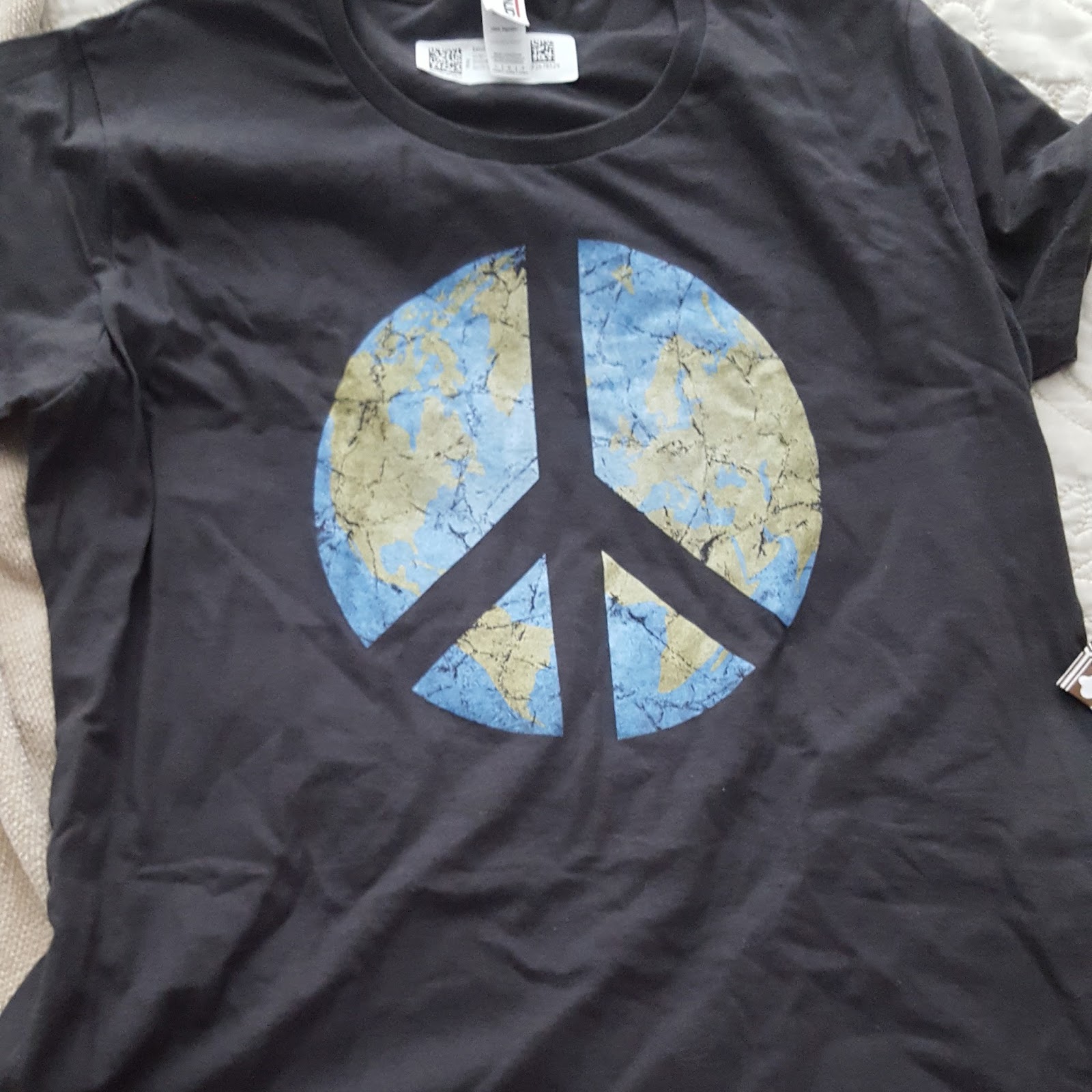


I have to say, it is one of her better gifts.

But now I really wanted an adult coloring book. Could I buy one online? There's no Norway branch of Amazon, so I would have to try to avoid customs fees and pay international shipping. Blargh.

This is where the anxiety beast rears its ugly head. It is always there, curled up in the corner, but now it lifts its head and turns to me, snorting in a condescending way. It is visually striking, very pointy, and red; not really ugly, exactly. Its ugliness is on the inside.

The quest that is not a quest has now taken shape. I want to do a thing that should be a reasonably stress-free thing to do, but anxiety gets in the way. Sometimes that just happens. Sometimes your brain turns mundane things into huge, large, BFDs. Or, at least my brain does. (The anxiety beast is in my mind of course, because it is mine; it is me.) And when this happens, to cut out the "I should be able to do this normal adult thing what is wrong with me?" voice, it helps to think of these as a quest, because quests have a goal, a purpose, and there is loot at the end.

I fully expected to have this on my To Do list for a long time, because dealing with customs or venturing into a new place in search of goods or services are exactly the types of things that give me anxiety, which means I avoid them. (I usually go an unnecessarily long time between hair cuts for just this reason.) Perhaps I am a hobbit at heart and do not like going on adventures. But this quest was for something to help with anxiety, which would help me complete more quests! What to do?

It turns out, this adventure was unexpectedly easy. I avoid the eyes of the anxiety beast. I wander into a local book store, which has plenty of adult coloring books. I pick one. I spend a long time choosing colored pencils. The anxiety beast flicks its tail with impatience. A shorter, but not small, amount of time choosing between two sharpeners. Everything seems as expensive as ordering online with customs and shipping would have been. I worry over that for a bit. I buy them anyway.

The loot is better than I could have hoped. The coloring book is also a treasure hunt, with 16 rabbits, 14 butterflies, 9 spiders, etc. hidden in its pages. (Plus I learn the Norwegian for spiders, "edderkopper," which reminds me of the part in The Hobbit when he's taunting the spiders in Mirkwood with "Addercrop", which makes this "Magical Forest" coloring book even more magical.)

It gets better. Flipping back and forth, I notice that the pages seem to be connected - a picture of a telescope is followed by a zoomed-in image of the Castle, which is at the end of the book. The back has some pages that can be folded out, which I start to do, but first I translate:

"Turn the next page to find out what is hidden in the castle." 

Should I wait until I'm done coloring to see? Then the page before:

"Fill in the nine symbols to unlock the castle door."

Wait a minute.

This coloring book is a quest!


(This is the part of the story with an actual quest. Hooray, you found it!)


Like all good quests, it starts with a map:

From "Den magiske skogen" by Johanna Basford

The map is representative of what you will find on your journey through the pages of the Magical Forest on your way to the Castle: a tree-house village; a lake; a rabbit hole; a hedge maze. I decide to finish it in pieces as I finish the full pages, starting with the compass:


It turns out, these leaves and things are tiny. Coloring this takes a long-ass time, but of course there's no rush. And it takes even longer, because I find myself deliberating over what color to use, like, a lot. I've turned the color choices into a BFD: "I can't make all the leaves green, that would be boring. But leaves aren't orange (and I hate orange anyway!) But wait, leaves can be orange in the Autumn... and these diamond-shaped leaves are magical so they can be blue, and otherwise I wouldn't use blue very much anyway.... but I fucked up with those mushrooms, I should have kept them red...." And so on.

It may sound like coloring is giving me anxiety, but it is not as bad as all that. Sure, every time I have to make a decision, like what color to use for this very special leaf, the anxiety beast lifts an eyebrow as if to say, "Really? That one?" (Did I mention it had eyebrows?) But it's okay. In a coloring book, there is no danger of making myself believe these choices will have a huge effect on my life or alter the course of reality, which I tend to do for other decisions. If my brain is going to turn things into a BFD anyway, it is safe to do so within the pages of the Magical Forest.

It has just occurred to me how different this is from jigsaw puzzles. Maybe those allow my brain a safe space to figure everything out, because unlike life, there is a correct configuration of puzzle pieces, a right answer, and you just have to be smart and patient enough to find it. Maybe jigsaw puzzles help with a different type of anxiety beast. (That one is blue.)

The coloring book also allows you to be creative and to imprint your own meaning, tell your own story. So if I want to turn the compass into a symbol of the yearly cycle, that's exactly what I'll do.

Wednesday, April 1, 2015

It's Okay to Be a Fool

I don't like doing April Fools' Day pranks, and (or because?) I don't like getting pranked. If I think about it, it's probably some social anxiety related fear of looking stupid in front of people. But honestly, most April Fools pranks involve straight up lying to people, and if they believe the lie they are a "fool". HAHA?

But maybe it's good to have one day a year where it is okay, even expected, to be a fool. To not take things so seriously. You thought something was true and you were wrong, but laugh about it, it's aight! You can't trust people, even friends and family, to be straight with you and not lie to your face for a laugh at your expense.... ain't life a hoot!

Life is absurd.

April Fools' Day is a good day to celebrate being silly and, if you can manage it, not giving a shit what people think. Kids are good at this, but at some point we learn to worry about being judged for not behaving "appropriately" i.e. like somber Adults. Eff that. Being an adult is overrated. One of the things I love about playing with my niece and nephew is doing silly shit and not caring because a kid is making me do it, that's how it works. If you don't make a fool of yourself in front of a baby that baby will be unimpressed. (And will miss out on working their face muscles trying to imitate you? That is a plausible theory, someone should look that up...) That baby wants you to be a fool and will reward you with a smile.

The interesting thing I learned from the internet today is that April 1 used to be when people celebrated the New Year. A possible origin of April Fools' Day is that when New Year's Day was changed to January 1, some people either didn't hear about the change (there was no internet back then) or refused to move their day of celebration, so they were made fun of. New Year's on April 1 is kind of great though (for the Northern hemisphere anyway): it's Spring! Things are new! Plants and animals that hibernated over winter are coming back to life! Gods are resurrected! Eggs and bunnies! The Chinese New Year also marks the beginning of Spring. What better time to celebrate newness than when things are new?

And since I brought up symbols (gods and eggs), let's look at the symbolism of the Fool. Or rather, let's watch Joseph Campbell talk about the Trickster god in Native American mythology who "represents the power of the dynamic of the total psyche to overthrow programs." The great thing about the Fool character/archetype (and of course I first learned this from Campbell's "The Power of Myth" special) is that he's "both a kind of devil and fool and the creator of the world" who "breaks through the notion of what a deity ought to be."


And of course, breaking through the notion of what a deity ought to be is important because our idea of God, and its many images and manifestations, is just a symbol, a mask of eternity. It is not eternity itself. If you forget that, the Trickster will fuck with you.

So, folks, it's okay to be a fool. God is a fool, and you are god too.

Happy New Year!

Friday, November 29, 2013

The Christmas Spirit

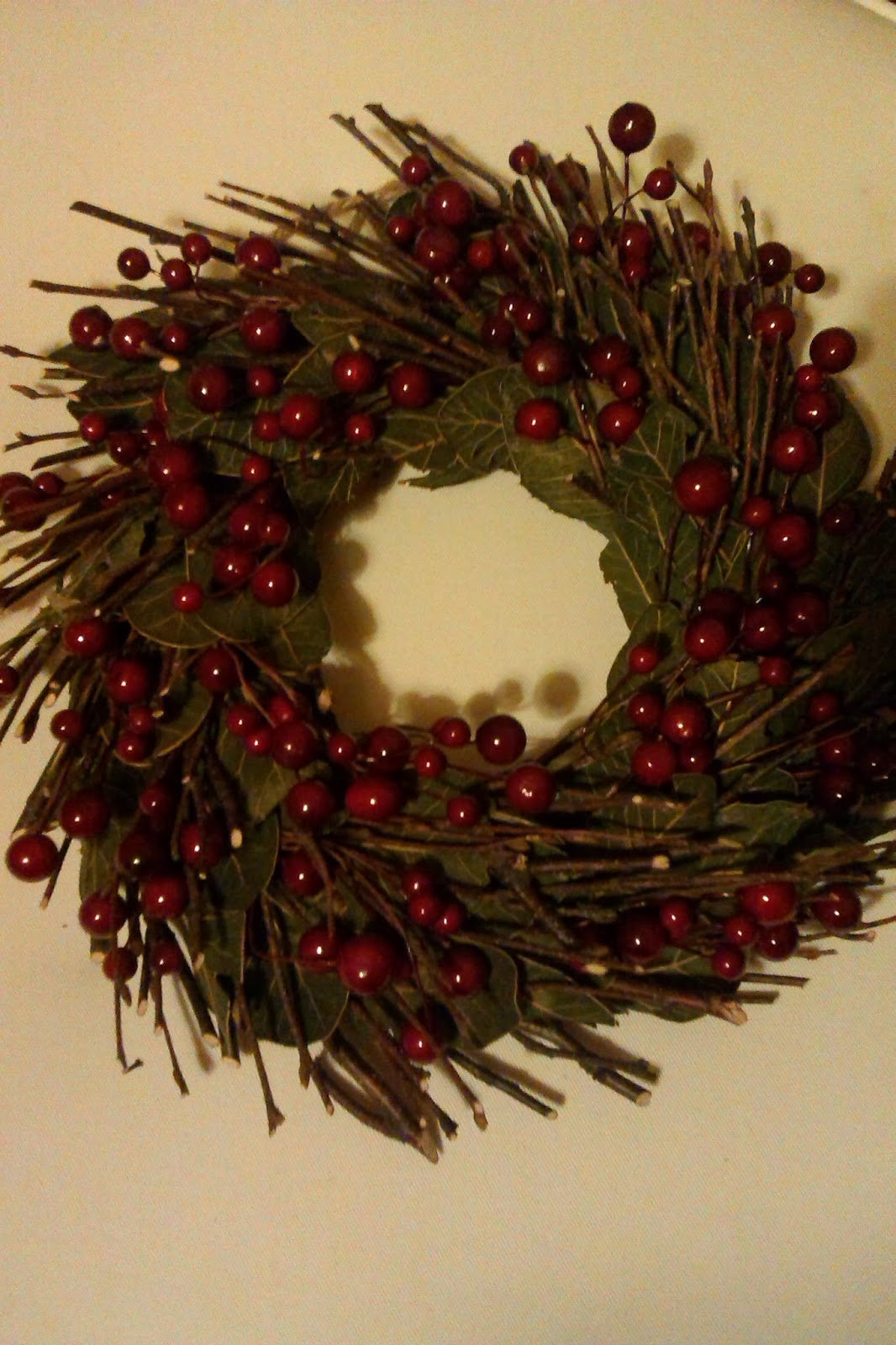
For some reason this year, I am all about Christmas. I bought a wreath and candles about two weeks before Thanksgiving, and that was it. I held off as long as I could, but I had already listened to Mannheim Steamroller and watched Scrooge before the Season had officially begun.

Perhaps I got into it early because in England they don't have Thanksgiving for a buffer. As early as October, shelves are stocked with Christmas crackers (not for eating) and mince pies, and by November the German Christmas Market is up. Sure, there's nothing particularly Christmas-y about a bratwurst to Americans (though it's a tradition I could get behind!), but there was something about it - the little fake cabins with the fake holly - that put me in the Christmas Spirit.


So what the hell is the Christmas Spirit?

Like all good questions, this has many answers. Anyone who celebrates, or lives in a country that celebrates, Christmas could give you their own answer, and these are all fine by me. I could go on about the things I enjoy... dark red and green together, lighting candles, decorating the mantle in just exactly the right way, cuddling by the fire with hot chocolate, listening to Mannheim Steamroller wrapped in the Christmas blanket, smelling the tree... it's about being warm in the middle of the cold, and feeling good for absolutely no reason.

I'm an atheist and I love Christmas. There I said it. And it doesn't bother me one bit that I'm ostensibly supposed to be worshiping the Sun God. (Do you ever use a word without being certain that you're using it in the right way? Ostensibly that's what I just did.) I don't blog about religion as much as I thought I would. Partly because people can get easily offended, but mostly because I don't care what people believe. For questions of spirituality and faith and love, there are no right answers; for questions that deal with the physical world, such as the age of the Earth and biological evolution, we have science.

But these are complicated philosophical issues, and I digress. I've become more interested not in what people believe, but why. Religions weren't created in a vacuum... there are psychological and sociological reasons for why humans believe what they do and behave they way they do, and that shit is fascinating.

It's no coincidence that the primary holiday of the Northern hemisphere is during their winter, the same as it's no coincidence the Christian church eventually chose December the 25th as the birthday of their savior. Yule, Saturnalia, Solstice... of course Jesus is born when the sun is at it's lowest in the sky, for Jesus is the Son and the Sun. The pagan traditions that Christmas adopted, like bringing a pine tree into your house, are a celebration of life in the midst of death. There is no need to celebrate life in Summer when it is all around you; but Winter is the time for endings. The evergreen tree, the birth of Christ, remind us that life will begin again.

Winter, Spring, Summer, Fall.... let's break the seasons down. You might be thinking that no, Spring is the real time to celebrate life. And you'd be right, too; Easter with its eggs, bunnies, and resurrection celebrates the renewal of life: Spring is the season of Beginnings. Summer follows as the season of Being, and Autumn/Fall as the season of Ending: the trees lose their leaves, and we treasure the last bounty of the harvest.

So where does that leave Winter? What is left after Beginning, Being, and Ending, can only be Non-being. Winter is the season of the Spirit.

The spirit, like the Sun, is constant. The moon symbolizes the cycles of time by its monthly cycle of birth and death, but the sun symbolizes the eternal, which is outside of time. (I will admit that this is from Joseph Campbell, like most of my deep thoughts on symbolism and mythology.) Symbolized by the evergreen tree and the birth of the Sun God, Winter, then, is outside of time; between death and birth; the silence between the sound. Christmas is the time to settle, regroup, reflect, and prepare for the New Year. And eat lots of chocolate.

So that, in a very large nutshell, is what I think about the Christmas Spirit. I didn't even mention how I love the icon and imagery of Santa Clause, with a twinkle in his eye and a deep laugh. To me he is not the fat man in the bright red with white trim, but more of a Mithrandir archetype of the wanderer, doing good where he can, eternally wise and eternally eternal. (Mithrandir is Gandalf, btw. It means the Grey Pilgrim in Sindarin. Do I have to explain everything to you?)

Happy Christmas!

Wednesday, September 28, 2011

Joseph Campbell and the Masks of Eternity


A while ago I was asked to blog about Joseph Campbell, and after months of not knowing how, here it finally is. It’s hard for me to try to condense what I understand and love about Joseph Campbell into a few ideas. I’ve been watching The Power of Myth ever since college, after I read The Hero with a Thousand Faces (I still have the book I “borrowed’’ from my mom), when I saw it on TV and decided I had to buy it. I once described it as food for the soul. So for one, it resonates with me. For another, it deals with the human experience (as all myths do) and so it is universal and un-specific, and thus it is hard to specify. But anyway, it’s difficult to sum up what Joseph Campbell means to me... but this blog wasn’t created for summations that distill great meaning into digestible portions of meaninglessness, so I will do what I can. To not do that.

After watching the last episode of The Power of Myth, “The Masks of Eternity,” and writing down everything awesome (which filled nearly three pages), I am resisting the urge to quote the entire thing. But I think there is one part where Joe explains a statue of the Hindu god Shiva which encompasses most of the main themes he talks about.
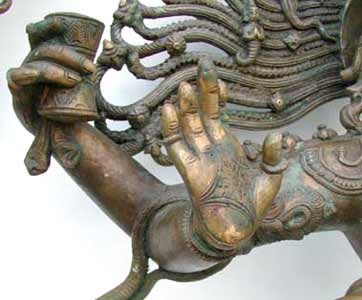
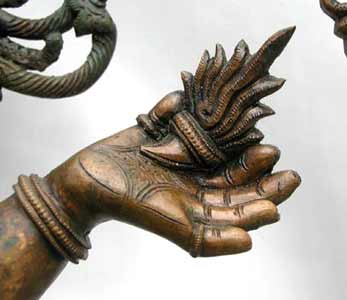
 “The dance of the world – the dancer whose dance is the Universe. In this hand he has the drum of time, which shuts out eternity, and we are enclosed in that; and in this hand a flame which burns away the veil of time and opens us up to eternity; and in his hair is a skull and a new moon, the death and rebirth at the same moment, the moment of becoming.... The goal of your quest in your life is to find that burning point in yourself, that becoming thing in yourself, which is fearless, and desireless, but just becoming.”


Drum of time: The beat of the drum symbolizes time and shuts out eternity, which is timeless. Thought is temporal. Symbols are expressions of thought. The great mystery transcends thinking and symbols. “God is a thought – God is an idea – but its reference is to something that transcends all thinking. It is beyond being! Beyond the category of being and non-being! Is he or is he not? Neither is or is not.” So the idea of God that most people have is a symbol of the eternal, but it is not the eternal. Everything that exists, exists in the field of time, and things like unicorns merely do not exist, but the eternal refers to the transcendence of such dualities and is not then, or there, but in the ever-changing moment.

Flame of eternity: The flame which burns away the veil of time opens us up to eternity. It is a cleansing fire. To be open to what is instead of what you desire or what you fear is also to give up your ego and your identification of self with your thoughts. You are not your thoughts, and you are not your fears. This is the experience of the sublime, which opens you, but which may be terrifying, detaching you from what you had identified as yourself – your house, your car, your job, your country, what you are good at, what you hate, what you find funny – The “dismantling” process talked about in I <3 Huckabees, this is it. You are the blanket.

Death and rebirth: In the “moment of becoming” you have the symbols of death and rebirth, creation and destruction, and the idea of unified duality. Duality is expressed by the world and its opposites – being and non-being, light and dark, good and evil, up and down, true and false – and in the unity of duality, as in the symbol of the Yin Yang, polar opposites are understood as existing coherently and inter-dependently – for if there were no such thing as dark, then light would be meaningless. In one episode Joe talks about how Adam and Eve in the Garden of Eden, the garden of unity, eat of the fruit of knowledge of the pairs of opposites and are cast out. From Heaven to Earth truly: from transcendence to existence. This is not to say that Heaven is a place, for that gives it the property of existence. Heaven is an idea, whose “reference is to something that transcends all thinking.”

Burning point of becoming: The statue of Shiva is understood as metaphorical, as all myths are, of the human mystery, and so the “quest in your life” is not to worship the god Shiva but to find the Shiva-ness in yourself that is “desireless and fearless.” The hero’s journey is a symbolic undertaking that represents this quest: the hero leaves the world of the known to obtain rejuvenating life for the community. The hero finds and brings back fire, dies and is reborn, kills the dragon, becomes enlightened... but myths, religions, and rituals can be understood in terms of the hero’s journey because the hero is a symbol of you, and his journey symbolizes your life. “Have you died to your animal nature and been reborn?” Have you killed your dragon of ego and greed?

Well, how do you do that? Find that point of fire within yourself: “Follow your Bliss.” (Or, as he later remarked, follow your blisters.) This is not what makes you happy but what makes you energized, or makes you “feel the rapture of being alive.” It increases the awesome and decreases the suck. It is the immovable center, the eternal, the God, that is in you. It is your hero quest and your great adventure. For Joseph Campbell, his Bliss was in the study of mythology. Sometimes mine is writing this blog. However:
“Words are always qualifications and limitations, and that’s why it’s a peak experience to break past all that, every now and then, to realize: ‘Oh, ah.’ I think so.”
As do I, Joseph Campbell. As do I.

Thursday, July 7, 2011

The Inner Reaches of Outer Space

A mythological perspective on why we need the James Webb Space Telescope

On July 6 it was announced that a House Appropriations Subcommittee cut JWST from their proposed budget. JWST is the next Hubble – except it will be bigger and better and more amazing! I won’t go into details about why we need this for science, or for education and public outreach, or for the U.S. position as a world leader in space science and technology, or for supporting innovative STEM research and education that will ensure future economic prosperity and national security for generations to come (!!!) .... because others will do that better. The cosmic variance blog had some very informative posts along with this amazing video:

This video is awesome itself! And it sums up my point: we don’t need Webb because it will cure malaria or do anything else useful; we need it because it is “awesome in the truest sense of the word awesome.” Astronomy is a unique science in its broad ability to be awe-inspiring. The vastness of space puts our daily lives in a different – and sometimes frightening – perspective. Space is the “final frontier,” the last boundary between everything that is familiar and everything else. Space is amazingly empty, but of the 20% of matter that we can actually see, there are a wide variety of stars, planets, galaxies, nebulae, clusters, etc. that are simply beautiful.

The title of this post refers to the last book written by Joseph Campbell: “The Inner Reaches of Outer Space: Metaphor as Myth and as Religion,” of which the first chapter is called “Cosmology and the Mythic Imagination.” (Yea, I study cosmology. Word.) The contemplation of space provided us by the study of astronomy takes us out of ourselves into the great unknown. The feeling of awe is, in my opinion, exactly the feeling that we look for in religion: being a part of something “bigger” than ourselves. But what astronomy does is unite the “us” to be all of Earth and not one society, one religion, or one ethnicity. There’s nothing bigger than THE ENTIRE UNIVERSE! And it turns out we actually are a part of it because it actually exists. Campbell suggests that in Space lives a new mythology, able to invoke a sense of wonder and awe in a way that the old myths, founded in an obsolete 3-layer view of the world, cannot.

So yes, Virginia, we DO need the James Webb Space Telescope. Once Hubble dies for good, it is our best chance of keeping the awesome alive. We need to make a Webb 3D Imax that explores other worlds and their ability to support life, the first stars and first galaxies, the nature of dark matter and dark energy, and the new jewels in the vast emptiness that we have not yet imagined. We need to be reminded of our small and insignificant place in a universe that doesn’t care whether our planet survives. And we need more opportunities to be filled with the awe of being alive.